18 April 2026
Cat cuddling therapy
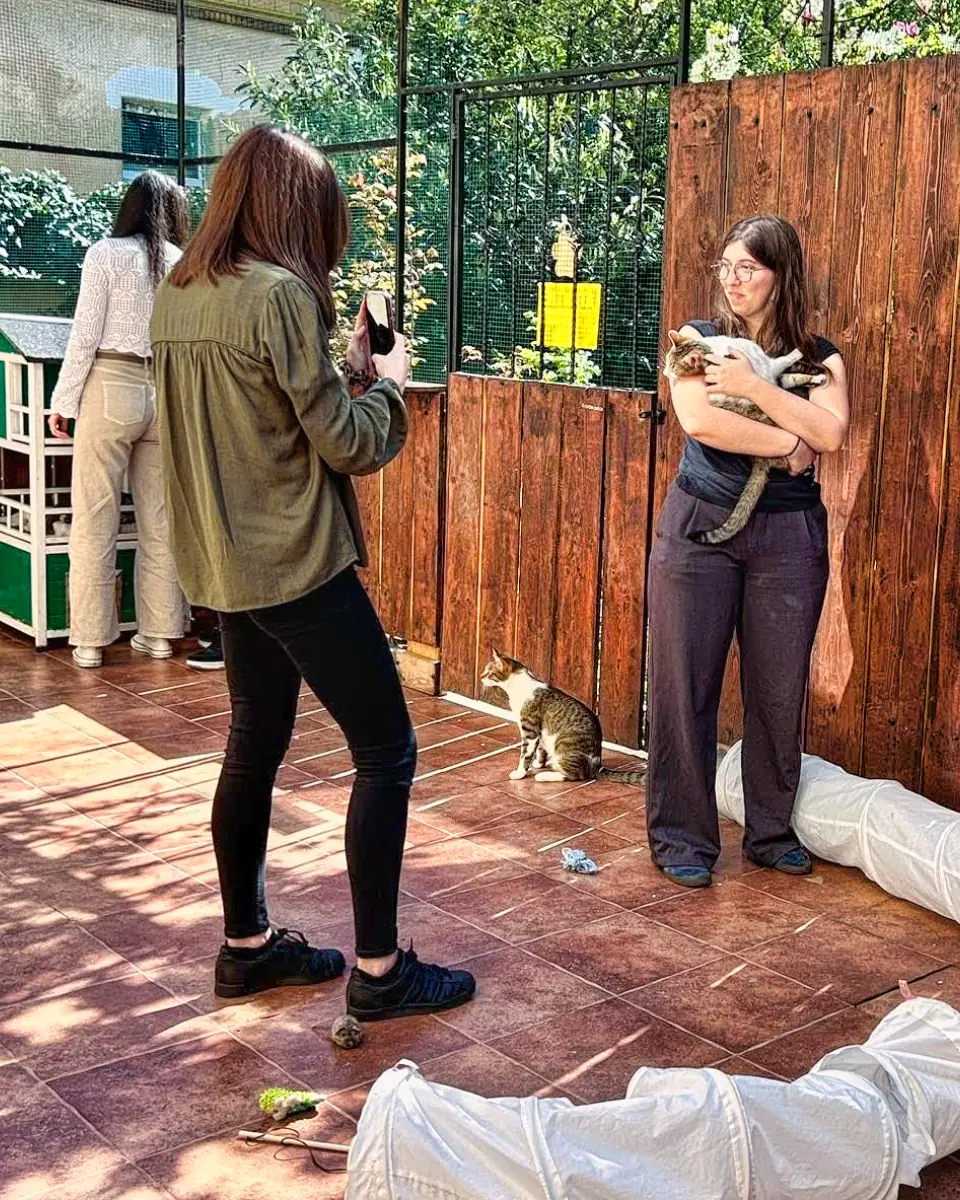
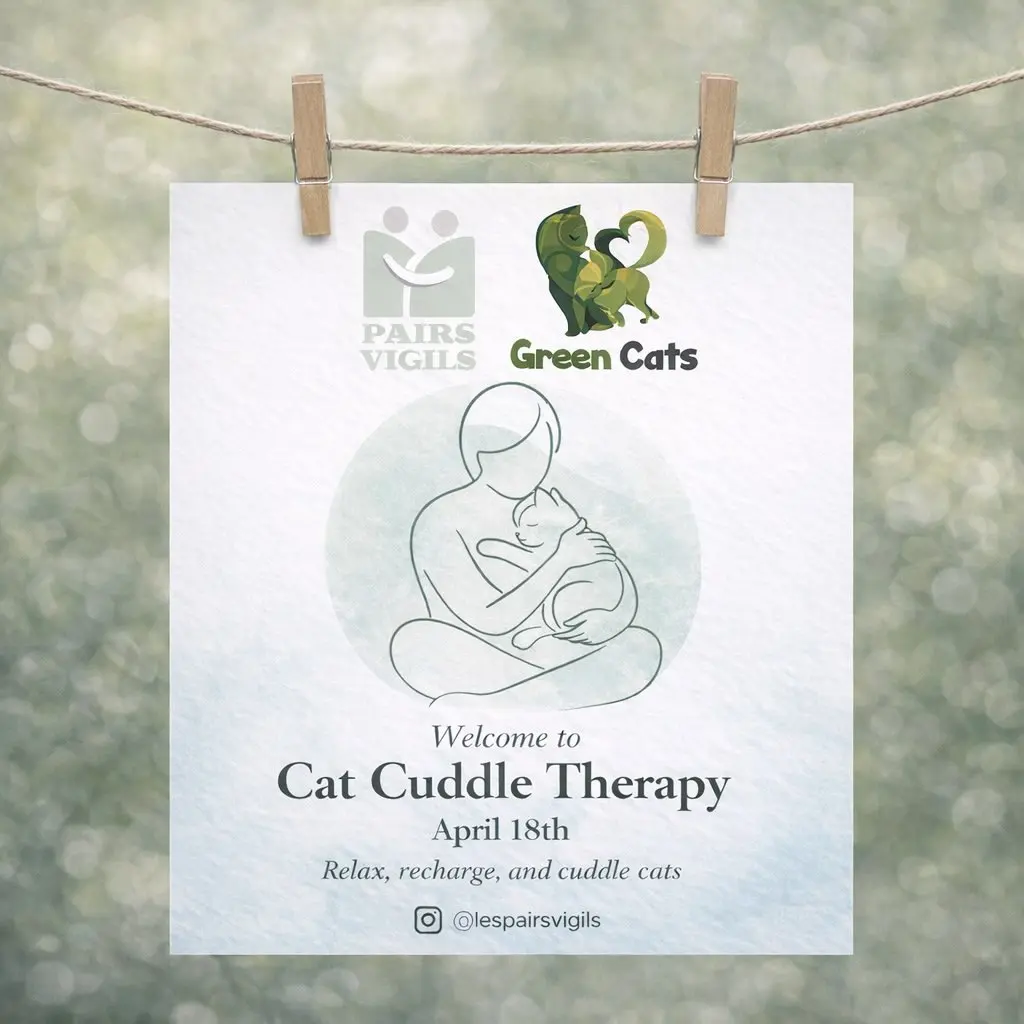
On April 18, we had the pleasure of hosting a special event organized by Pairs Vigils—an initiative dedicated to providing psychological support for the Francophone student community, which creates safe spaces for reconnection, tranquility, and emotional balance.
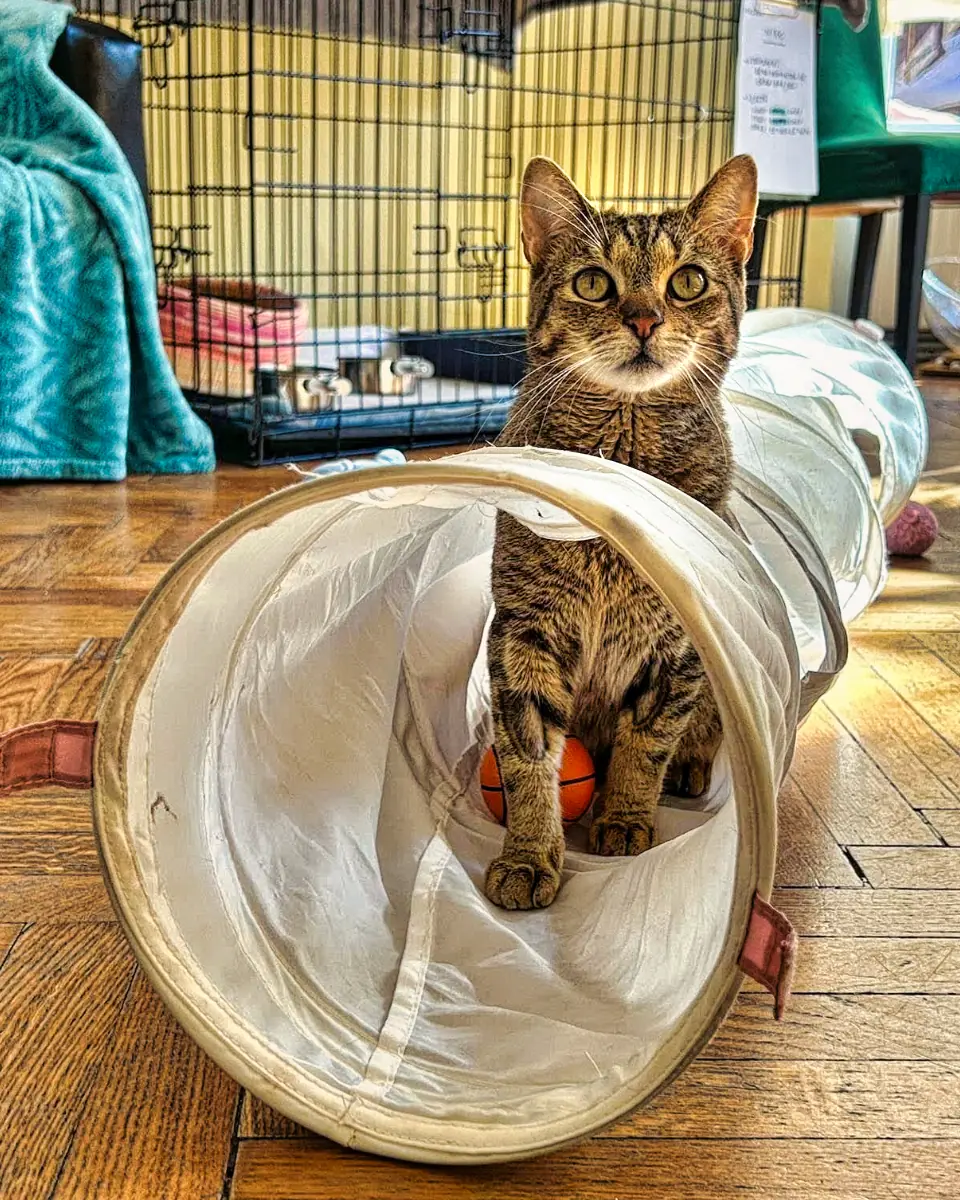
Together, we brought to life a simple concept with real impact: time spent in quiet, alongside rescued cats. We provided the space and… the fluffy hosts, and they created the setting where people could, for an hour, slow down and breathe.
It was a full, warm day, with open-hearted people and cats who did their job better than any formal therapy: they offered presence, calm, and just the right amount of comfort.
💚 All donations collected during the event went entirely toward the care of the cats in our care, for whom every initiative like this matters immensely.
Thank you to Pairs Vigils for your collaboration and for the way you conceived and carried out this event. And thank you to everyone who was there—you made this day truly special.


Events
1 March 2026
Martlets for animals
Even if it doesn’t seem like it, spring is on its way!
And what better way to welcome it than with a new “Martlets for Animals” event—the fifth edition—to which you are all invited!
As we do every year, our volunteers have been preparing well in advance so that visitors can enjoy clay or wooden mărțișoare, beaded necklaces, and braided bracelets. Each one is unique and special, just like the kittens in our care!
All proceeds will go toward our kittens, who can’t wait to feel the arrival of spring.
You’ll find us at the booth, ready to talk about the kittens, spaying and neutering, and adoptions!
We look forward to seeing everyone, young and old, to welcome spring together!





Events
Did you know that moving to a new home can be a difficult experience for a cat?
How to help your feline companion adapt safely and without stress.
Cats are animals deeply attached to their space. For them, a house is not just a place — it is their territory, their source of safety, a universe they know through smells, sounds, and routines. That is why moving can be a major event, sometimes overwhelming, taking them completely out of their comfort zone.
However, with a little preparation and a lot of patience, you can transform this change into a much gentler experience for your cat.
Before the move: prepare the ground
Cats sense human stress, and packing things, commotion, and multiple visits can create tension. To protect them:
- Create a safe space in a room where they won’t be disturbed;
- Keep their feeding and play routine as constant as possible;
- Get them used to carrier transport in advance, offering treats and leaving the door open for exploration;
- Keep familiar objects handy (blankets, toys, small blankets impregnated with the smell of the old house).
A calm cat before the move will be a calmer cat in the new house.
Moving day: protection first of all
On moving day, the cat must be kept in a closed and safe space, preferably a bathroom or an empty room with the door closed. An open door or people constantly entering and exiting increase the risk of the cat running away in fear.
Transport the cat in a secure carrier, covered with a thin blanket to protect it from excessive stimuli.
After the move: slow and gentle adaptation
Most cats need a few days — some even weeks — to feel safe in their new home. The most important step is not to give them total freedom from day one.
Start gradually:
- An accommodation room, where the cat has everything it needs: litter box, water, food, hiding places, toys, as many of its “old” little things as possible – now is not the time to change the cat’s accessories because objects with a familiar smell will help it feel continuity between the old house and the new one;
- Gradual exploration time, room by room, not the whole house at once;
- Calm presence, play, treats, and a gentle tone.
As it gains confidence, the cat will go out on its own to explore the rest of the house.
After overcoming the initial phase of anxiety, many cats draw closer to humans, seeking comfort and stability. This period is an excellent opportunity to create a deeper bond and establish new, positive routines.
Conclusion
Moving is not just changing an address — it is a real emotional challenge for your animal and it is important to think about the impact on it as well. But with care, patience, and a gentle pace, the cat can transform an unknown space into a new home, full of safety.
Adaptation must not be rushed. It just needs to be understood.
Did you know that your cat’s body language says more than a meow?
Cats communicate in subtle and sophisticated ways – and meowing is just a small part of their ‘language’. Often, their behaviors can seem strange or unpredictable, but in reality, every movement of the tail or position of the ears tells a story.
To build a harmonious relationship with your cat and to avoid misunderstandings or problematic behaviors, it is essential to learn to ‘read’ their non-verbal language.
Eye expression – the mirror of the feline soul
-
 Dilated pupils
What it means
Can indicate fear, agitation, excitement, but also pain. They usually appear suddenly in unexpected situations (loud sound, unknown presence, etc.).What to do
Do not look directly at her and do not touch her. Let her retreat or explore safely. Create a calm environment. If you notice it is unrelated to environmental stress, a vet check is recommended. -
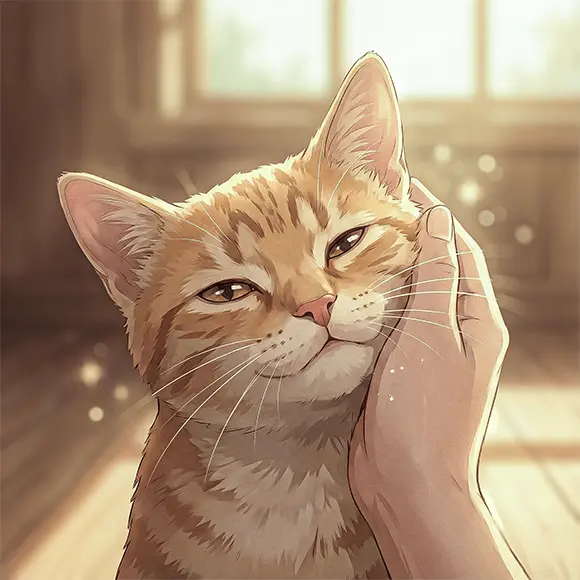
The slow, half-closed gaze
What it means
It is the equivalent of a feline ‘I love you’. If a cat looks at you slowly and blinks, it means she feels safe with you.What to do
You can blink slowly back at her – it’s a gesture of mutual trust. Offer gentle pets if she seems open to it. -
Fixed, insistent staring
What it means
Between cats, it is a sign of dominance or tension. If a cat looks at you this way, and her body is tense, it may be a warning.What to do
Do not respond with a direct gaze. Gently interrupt the interaction and offer a way out.



The ears – the cat’s emotional ‘radar’
-
Ears forward
What it means
She is curious, attentive, or interested.What to do
Offer interaction, games, or stimulation – it’s the ideal moment for connection. -
Ears sideways
What it means
Insecurity, evaluating the environment.What to do
Be calm, let her explore, avoid sudden gestures. -
Ears back
What it means
Annoyance, frustration, possible warning.What to do
Do not touch her. Let her retreat and observe what caused the stress. -
Ears flattened against head
What it means
Deep fear or preparation for self-defense.What to do
Offer distance immediately. Do not force contact. Create a safe and quiet space.




Body position – between confidence and alert
-
Relaxed body
What it means
The cat is calm, quiet.What to do
You can interact gently – it’s a good moment for affection or play. -
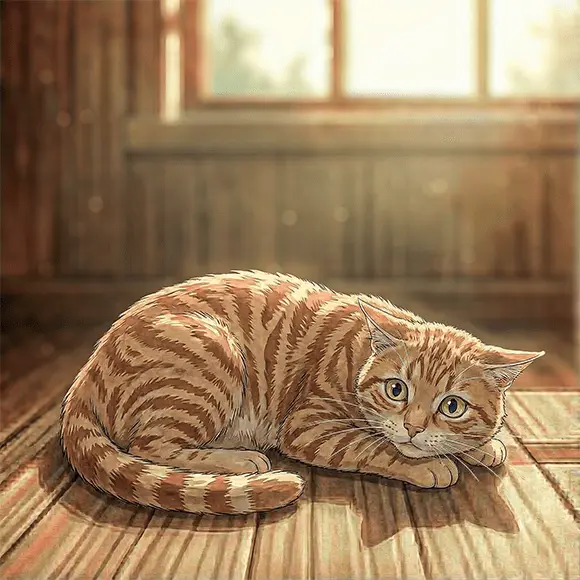
Crouched, tense body, big eyes
What it means
Sign of fear or uncertainty – possible perceived threat.What to do
Do not force closeness. Keep your distance and avoid touching or chasing her. -
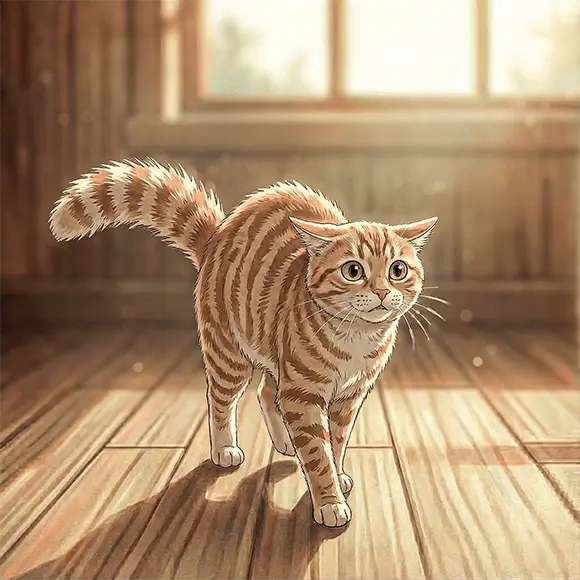
Arched back, bristled fur
What it means
Defensive fear signal – wants to appear larger to scare off a threat.What to do
Do not intervene. Let her calm down on her own in a quiet space. -
Exposed belly
What it means
Total trust, but NOT necessarily an invitation to pet.What to do
If you are unsure, do not touch the belly. Respect her space and offer her freedom of choice by extending your hand and petting her head first.




The tail – the mood barometer
-
Tail up
What it means
Happiness, confidence.What to do
Respond positively, play with her or speak softly. -
Bristled tail
What it means
Fear, perceived threat.What to do
Remove the stressor. Offer a safe space and avoid any interaction. -
Tail between legs / tucked against body
What it means
Anxiety, stress, fear.What to do
Speak softly, let her hide, do not insist on petting. -
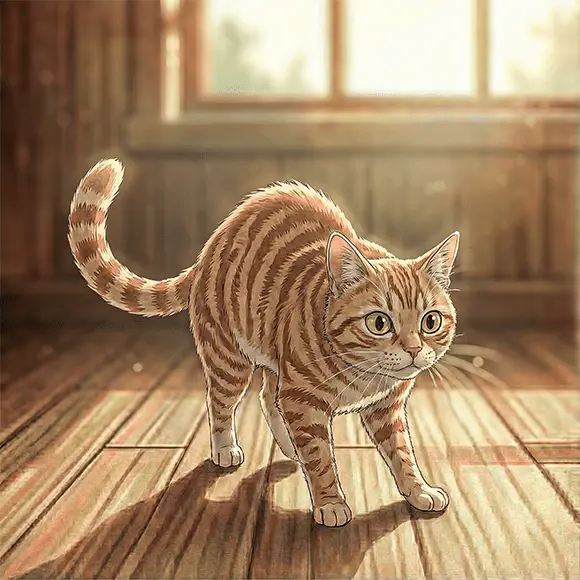
Curved, agitated tail
What it means
Irritation, warning.What to do
Stop any interaction immediately. Give her space and time to calm down.


The whiskers – sensors for proximity and emotions
-
Pointed forward
What it means
Curiosity, increased interest or maximum attention on an object / prey.What to do
Let her investigate. If you want to interact, do so calmly and without suddenly distracting her. -
Relaxed, slightly sideways
What it means
Calm state, the cat is relaxed and comfortable.What to do
You can continue the interaction or play without issues. -
Flattened against cheeks
What it means
Fear, stress or preparation for defense.What to do
Avoid contact, offer space and a safe place to retreat. -
Twitching rapidly back and forth
What it means
Overstimulation, irritation or frustration.What to do
Stop the interaction and let her calm down.


Other bodily behaviors with meaning
-
Rubs head or body against you
What it means
Marks you with pheromones → affection, belonging.What to do
You can respond with pets or a soft voice. It’s an invitation to closeness. -
Purring
What it means
Can indicate pleasure, but also pain or stress.What to do
Evaluate the context – if she is sick or acting differently, go to the vet. -
Excessive grooming
What it means
Can be a sign of anxiety or discomfort.What to do
Monitor behavior. If it persists, consult a vet.


Why is it important to understand body language?
Because ignoring these signals can lead to:
- Increased stress in the relationship with the cat.
- Wrong interactions (touching when it’s not appropriate).
- Unwanted behaviors, which are actually misunderstood messages.
How to recognize signs of discomfort or pain in a stray cat
Even though this guide is created mainly for understanding the house cat, the same clues can help you identify a cat in distress on the street. Here are some key signs:
-
Crouched body, flat to the ground, ears and whiskers pulled back
Can indicate intense fear or pain.
-
Rapid breathing, mouth slightly open
Sign of major stress or breathing difficulties.
-
Constantly dilated pupils, even in bright light
Possible pain or shock.



-
Moves with a limp or avoids using a limb
Possible blow, accident, infection etc.
-
Grooms a specific area excessively
May hide a wound or pain.
-
Refuses contact or hides immediately
Defensive reaction, often linked to discomfort.



To identify a veterinary emergency, read the article dedicated to this topic and act informed, without losing essential minutes.
Conclusion
Cat body language is a complete language – silent, but extremely expressive. Understanding these signals not only allows you to know your feline companion better, but also to prevent unwanted behaviors, conflicts, or ignored health issues.
Cats are not ‘cold’ or ‘indifferent’ – they communicate all the time. We just have to learn to understand them!
Did you know that cat play has a “secret code”?
Cats often play by running, gently biting, and wrestling – behaviors that can seem rough if you don’t know their language. However, there are clear differences between healthy play and real aggression.
What does healthy play between cats look like?
True play is balanced, fluid, and full of “unspoken rules” between participants. Here are the clear signs:
-
✔ Role Reversal
The one chasing becomes the chased, the one “striking” lets themselves be caught after a few seconds. If the interaction is mutual, it is almost certainly play. -
✔ Controlled claws, gentle bites
Although they can seem rough, cats playing do not intend to hurt. Bites are soft, and claws are often retracted. -
✔ Natural pauses
The cats stop, look at each other, shake their fur, or sit for a second — this is their way of checking if everything is okay for both parties. -
✔ Relaxed posture
Ears are in a neutral position, the tail is not puffed up, the body is not tense. Movements are fast but fluid, not rigid. -
✔ Lack of intense vocalizations
Cats playing might make small trills or purr, but they do not hiss, growl, or scream.
When does play become aggression?
Even cats that get along well can have tense moments. Play turns into aggression especially when one of them becomes overwhelmed, scared, or feels the need to defend itself.
Here are the signs that clearly show the situation is no longer a game:
-
❗ Only one attacks, the other tries to escape
If one runs away in panic, hides, or does not return to the interaction, it is not voluntary play. -
❗ Alarm sounds
Screaming, growling, hissing, or sharp vocalizations indicate fear or real aggression. -
❗ Clear defensive or offensive posture
Ears flattened back, puffed tail, arched back, dilated pupils — all show a high level of stress. -
❗ Strong bites or scratches
If fur is pulled out, skin is scratched, or wounds appear, play has turned into conflict. -
❗ Rapid escalation without pauses
When cats don’t take breaks, don’t temper themselves, and there is no reciprocity, the situation must be interrupted.
How to intervene safely?
It is important not to separate cats with your hands, as we can be accidentally injured. Instead:
-
Distract them with a short noise (a clap, keys, or even using your voice);
-
Throw a toy to the side to change their focus;
-
Temporarily place a blanket or pillow between them;
-
Separate them in different rooms for at least 15–30 minutes;
-
Restart interactions gradually, with guided play.
Conclusion
Prevention is key: well-defined spaces, sufficient resources (bowls, litter box, hiding spots), individual play sessions, and slow reintroductions.
See
Did you know there are a few steps to follow before bringing (another) cat home?
Many cats seem “aggressive”, but in reality, they are scared, overstimulated, or have unmet needs. Observing their language helps you prevent conflicts and maintain harmony in the home.
Did you know that even a feral cat can adapt to life indoors if guided with gentleness and patience?
How to help an unsocialized cat discover the safety of a home.
Feral cats or those raised in the wild, without real human contact, are often considered ‘impossible to tame’. In reality, most can learn to feel safe indoors, accept touch, and even seek affection — but their pace is unique. With small, consistent steps and lots of patience, the transformation can be extraordinary.
Create a small and safe space
Adaptation begins in a confined space, not the whole house. A quiet room where the cat has a litter box, food, water, and a few hiding spots (a box, a bed, a low shelf) helps enormously. The small space reduces anxiety and gives it control over the environment, which is essential for a scared cat.
Calm presence works wonders
The first days are dedicated to getting used to human presence. No forced approaches, no attempts to touch. Sit in the room, read, speak softly — let it learn that the human does not represent a danger. This is how trust begins.
Food — your most effective tool
Food creates a strong positive association. At first, the cat will eat only when you are not there. Then it will eat in your presence, and over time it will get closer and closer. You can gradually shorten the distance between you and the bowl, letting the cat dictate the pace.
Play — the first real step toward relaxation
A wand or a long toy can help it relax in your presence without feeling exposed. Play is one of the safest ways for cats to start expressing themselves naturally and approaching humans.
Let it make the first move
Feral cats need to take control of their own adaptation process. Do not touch it until it comes to you. You will notice small signs of progress: it comes out of hiding more often, stays in plain sight, blinks slowly, stretches relaxed in your presence. These are its steps, and you just provide the right framework.
Learn the language of a scared cat
Hissing, swatting, staying flat to the floor, or hiding are not ‘aggression’, but fear. Over time, these reactions transform into much gentler ones. Slow blinking, voluntary approach, or playing in your presence indicate that the process is working.
Adapting to touch and handling (essential for the vet)
For a feral cat, touch is a huge step. Start by approaching your hand slowly, without touching it. Allow it to smell it and withdraw. Repeat. Initial touches should be short, on the cheeks or forehead, areas where cats tolerate contact best.
Later, get it accustomed to the carrier: leave it in the room, put familiar blankets in it, feed it at the entrance. This makes vet visits much easier.
Adapting to other cats
Feral cats can coexist with other cats, but they must never be introduced directly. The process must be gradual and only after complete acceptance of the human:
- Start with scent swapping (blankets, towels);
- Then allow them to observe each other through a cracked door or mesh;
- Short, supervised meetings come only when both are relaxed.
Sudden interactions can cause major regression — that is why the pace must be slow and very controlled.
Remind yourself: any cat can succeed
There are no ‘lost’ cats, only cats that need more time. I have seen cats that stayed under the bed for three months and now ask for pets. I have seen cats that couldn’t be touched and now sleep on their human’s chest. Adaptation is possible — if their pace is respected.
Why it’s worth all the effort
The moment a feral cat comes towards you for the first time, touches you with its nose, or purrs — is one of the most profound gifts an animal can offer. Trust earned, not given from the start, has a unique beauty.
Conclusion
Feral cats are not ‘impossible cases’. They are just cats that have not yet known the safety of a home. With gentleness, space, consistency, and patience, almost any cat can come to live peacefully and beautifully indoors — and even become a surprisingly affectionate companion.
Did you know that black cats do not bring bad luck, but good luck?
Mystery, grace, and centuries of misunderstood magic hide within the gaze of a black cat.
The unfair reputation
For generations, black cats have been trapped in an unfortunate myth — considered by some as harbingers of bad luck or symbols of the unknown.
These ideas, born of superstition, have clung to our modern world and persist to this day.
In shelters around the world, black cats often wait longer to be adopted than those of other colors. Some people still hesitate, influenced by stories passed down from generation to generation.
But the truth is simple: black cats do not bring bad luck — they are loving, loyal, and wonderful.
It is time to restore the truth: black cats are not bad omens. In fact, throughout history and in many cultures, they have been symbols of protection, prosperity, and luck.
Ancient Egypt: the divine cat
In Ancient Egypt, cats were sacred protectors of homes and symbols of grace, fertility, and divine balance.
The Egyptians worshipped two sister goddesses — Sekhmet and Bastet — each embodying a different side of feline power.
Sekhmet, the lioness-headed goddess, was the powerful protector — a symbol of destructive yet healing solar energy, the defender of order and the Pharaoh. Her name meant “The Powerful One”.
Bastet, her gentle counterpart, evolved from a lioness into a domestic cat — protector of the home, joy, and motherhood. Together, they represented strength and tenderness, fire and grace, showing that the cat was both a warrior and a symbol of maternal love.
To harm or kill a cat — especially a black one — was an offense to the gods. Families who had black cats believed they brought prosperity, harmony, and divine protection.
Egyptian art often depicted black cats lying under chairs or alongside women, a sign of peace, beauty, and luck.
In this early civilization, the black cat was not a symbol of darkness, but of light — a living reflection of the sacred balance between power and gentleness.
Around the world: a symbol of luck
-
Japan
It is said that a woman who owns a black cat will attract a good and loyal partner. The Maneki-neko cat, in its black variation, protects the home from illness and evil spirits. In some coastal villages, fishermen’s wives kept black cats to bring luck and rich catches.
-
Great Britain and Ireland
Black cats are considered bringers of good luck! Sailors’ wives kept them at home to ensure safe travels for their husbands. In Scotland, a black cat appearing at your doorstep heralds prosperity. In the English Midlands, it is said that a bride who receives a black cat on her wedding day will have a happy life.
-
France
Folklore speaks of the Matagot — a magical black cat that brings wealth and good harvests to those who treat it with respect. In some regions, it was believed that black cats guide travelers safely through the night.
-
Egypt
The black cat remains an eternal symbol of divine power and home protection. Descendant of the sacred cats of goddesses Bastet and Sekhmet, it embodies strength and serenity — protector of the household and companion of the gods.
-
Thailand
Ancient Thai texts praise Korat and Konja cats, with dark fur, which were believed to bring rain and prosperity to farming families. Black cats were honored in temple rituals dedicated to fertility and abundance.
-
India
In some Hindu traditions, the black cat is seen as a protective spirit that guards the home against the evil eye and negative energies. In rural areas, it is said that they bring luck if treated with kindness.
-
Africa
In several African cultures, black cats symbolize healing, mystery, and connection with ancestors. In Southern Africa, it was believed they protect people from witchcraft — a belief later reversed by European superstitions.
-
United States
In modern folklore, especially in the South, a black cat crossing your path at night can mean good luck if you greet it respectfully. Today, black cats are celebrated as symbols of independence and resilience.








Throughout centuries and continents, black cats have been friends, protectors, and symbols of harmony — beings whose silent magic unites the human soul with the mysteries of nature.
Why adopting a black cat is a gift
When you adopt a black cat, you do more than offer it a home — you break a myth. You show the world that kindness, not superstition, should guide our choices.
Those who adopt black cats often discover that:
- They are calm, attentive, and affectionate;
- Their fur shines in the sunlight with reflections of bronze and blue;
- They bring a sense of peace and quiet magic to any home;
- Every adoption writes a new story — one where love conquers fear.
How you can help
Adopt
Give a black cat a chance to have a loving home.
Share
Post photos and stories about black cats on social media.
Use tags like #BlackCatsOrLuckyCats or #AdoptDontShop
Educate
Tell others that color has nothing to do with personality or luck.
Donate or Volunteer
Support shelters that fight superstitions and promote the adoption of all cats equally.
Our black cats
-
Shadow
-
Void
-
Carbon
-
Carlo
-
Blacky
-
Krokmou
-
Pocahontas
-
Munchi
-
Norbert
-
Doju
-
Spicy
-
Dima
-
Negruța

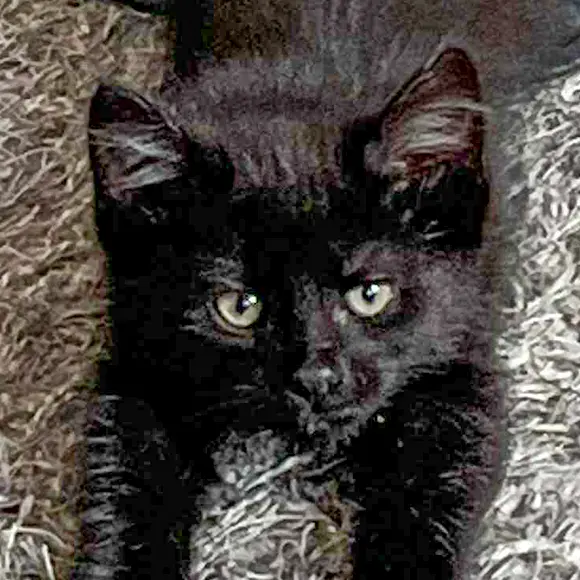
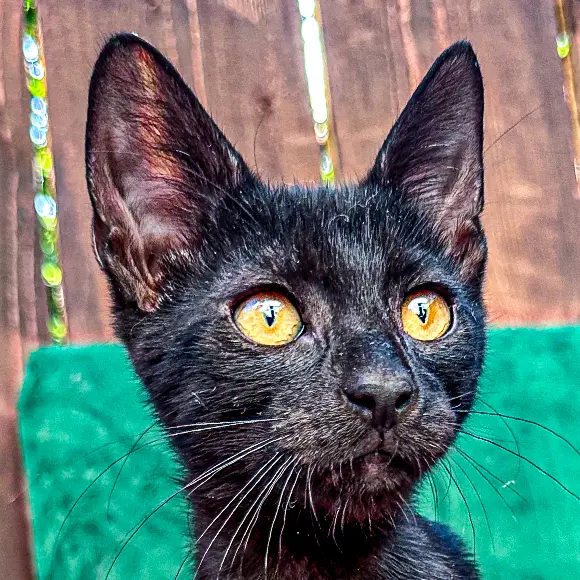
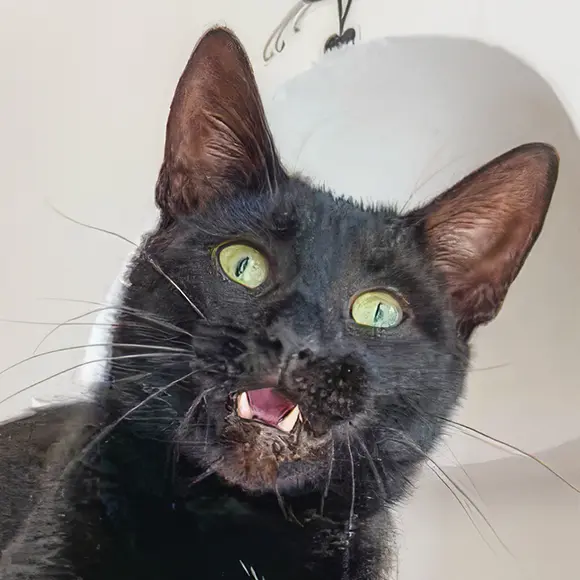
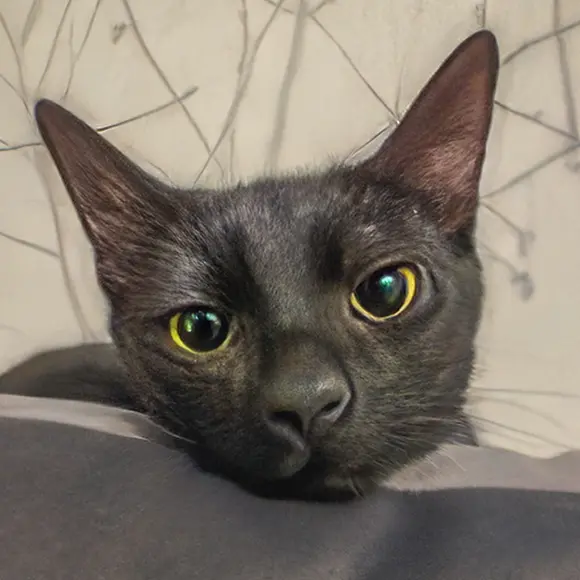
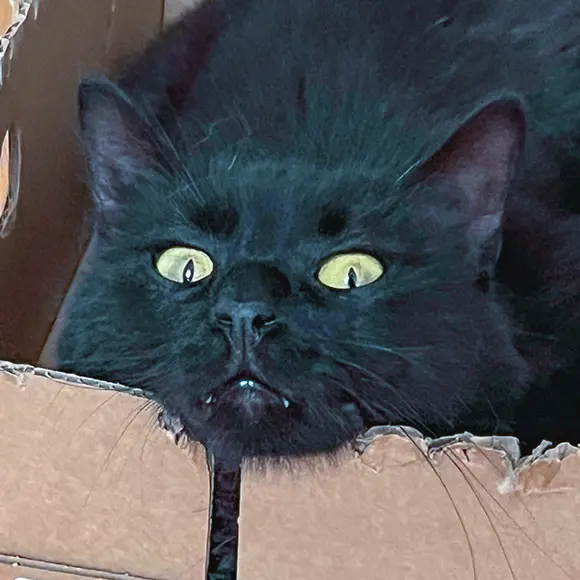
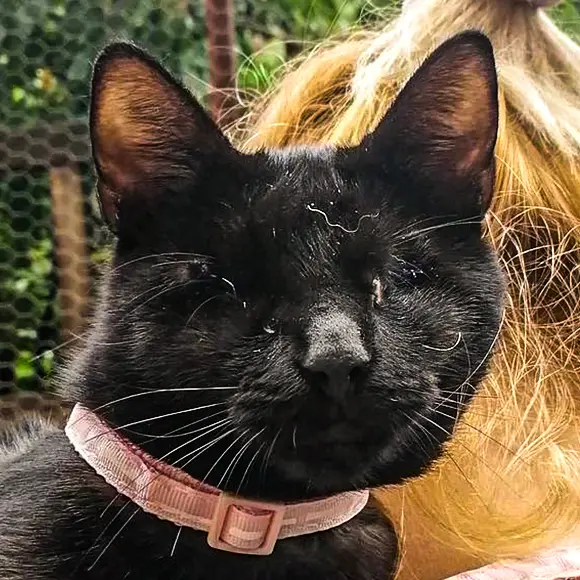
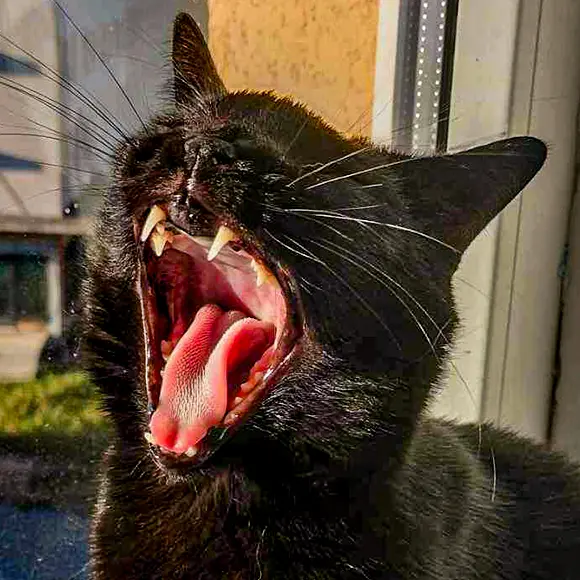
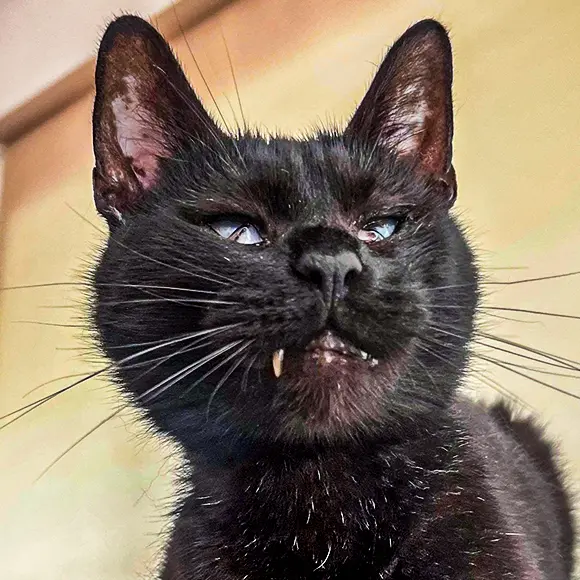
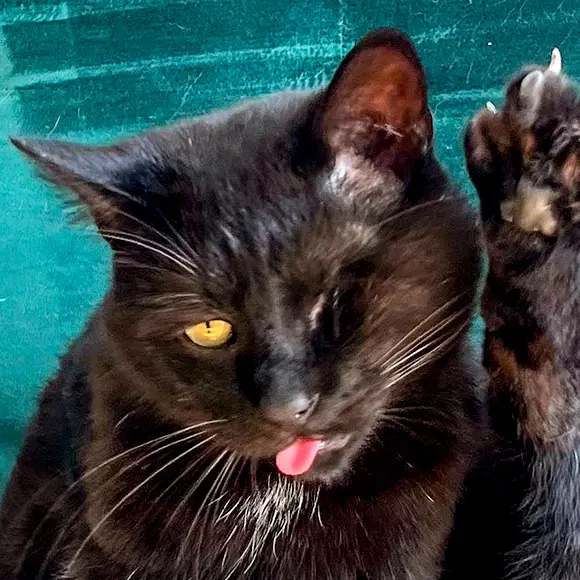
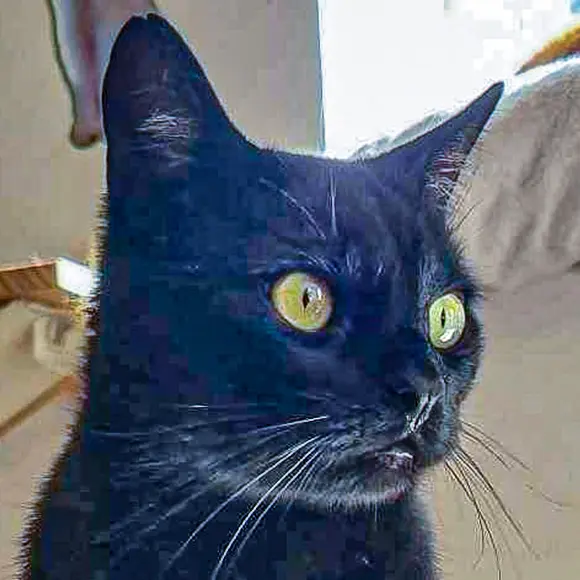
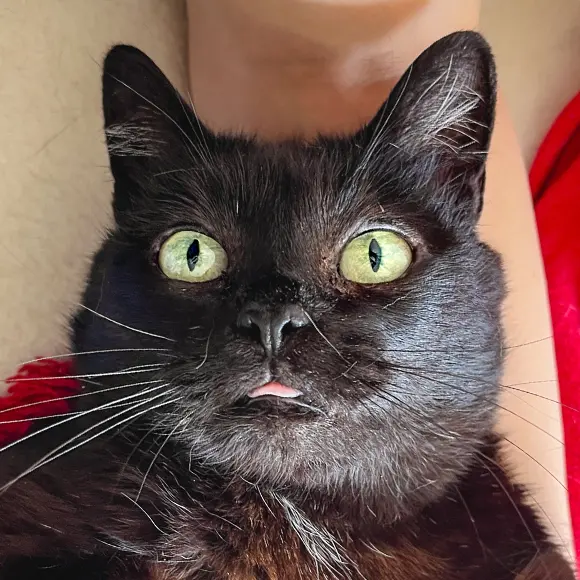
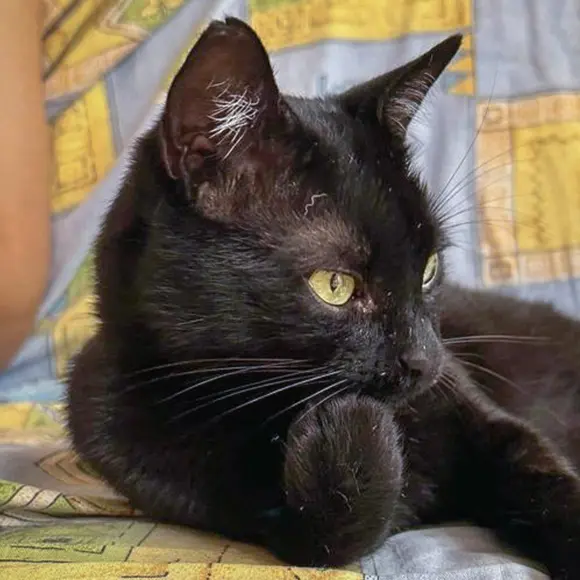
Conclusion
A black cat crossing your path does not bring bad luck — but a blessing.
It is a graceful reminder that magic still exists in the world — and lives quietly in the purr of a rescued cat.
All cats deserve love, safety, and a family.
Did you know that when a cat rubs its cheeks against everything it finds, it is actually communicating with you?
What this behavior means and why it is so important in the feline world.
If you have noticed that your cat rubs its cheeks against furniture, corners, doors, your legs, or even other animals, know that this gesture is not accidental. For cats, cheek rubbing against objects is one of the most important forms of communication. This is how they express emotions, safety, and belonging to the space they live in.
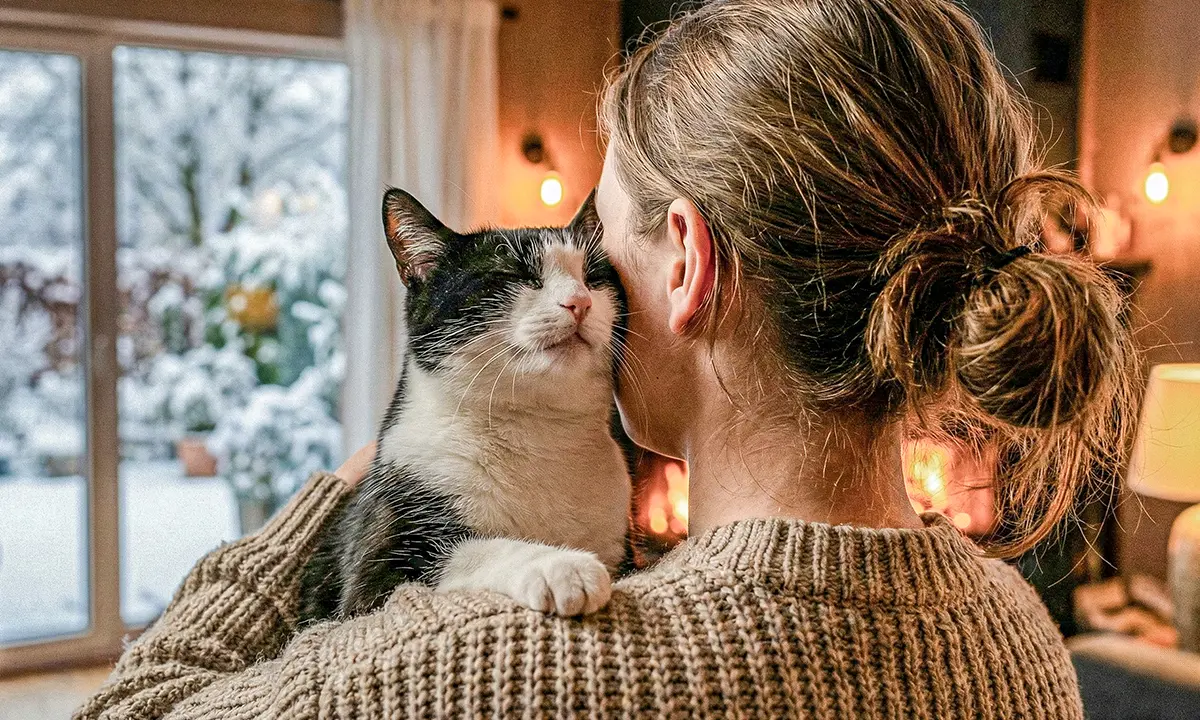
The cat rubs its cheeks to leave pheromones on objects
On their cheeks and the sides of their heads, cats have scent glands that produce pheromones — substances imperceptible to us, but essential for communication between cats.
When rubbing its cheeks against an object, the cat leaves its pheromones there, saying in its own way: “This place belongs to me. I feel safe here.”
For the cat, the environment thus becomes predictable, familiar, and soothing.
When it rubs its cheeks against you, it shows trust
Touching its cheeks against your legs or hands is a deeply affectionate gesture. Through this behavior, the cat mixes its scent with yours and includes you in its “social group”.
In feline language, this means: “You are part of my family. I feel safe with you.”
Sometimes, after doing this, it looks at you, purrs, or turns around for more petting — a clear sign of affection and attachment.
It also rubs its cheeks to attract attention
This gesture can also act as a way to “whisper” something to you:
- That it wants interaction;
- That it enjoys your presence;
- That it wants you to follow it to a certain place;
- That it is mealtime and it wants to politely remind you.
Cats communicate subtly, and cheek rubbing is one of the most elegant ways they ask for something.
Cheek rubbing is the cat’s way of saying: “Here is my home. You are my family.”
To us, it seems like a small gesture, but for them, it is a complete language — a combination of safety, belonging, affection, and territorial communication. Next time your cat rubs its cheeks against you, know that you are receiving one of the most sincere gestures of trust it can offer.
When the behavior becomes excessive
Although normal, if the cat rubs its cheeks against objects in a very repetitive or agitated way, it may be a sign that:
- The environment is too stimulating or stressful;
- It feels insecure;
- It is trying to regain control over the territory;
- There is a local dermatological problem.
In such cases, a veterinary or behavioral evaluation may be useful.
What can we do if the problem is veterinary?
-
Rapid veterinary consultation
The vet can check teeth, gums, skin, and ears — all are areas that can cause discomfort and trigger excessive rubbing. -
Excluding dental problems
Toothache or gum inflammation are extremely common and can cause the cat to repeatedly rub its head against objects. -
Checking skin and ears
Irritations, insect bites, dermatitis, or ear mites can cause itching or pressure. -
Appropriate treatment
Once the cause is identified, treatment is usually simple: anti-inflammatories, oral gels, cleaning, dietary changes, or specific medication. -
Gentle monitoring
After treatment, we watch the behavior to see if it returns to normal.
If the rubbing is caused by pain, the treatment completely resolves the behavior.
How do we help if the problem is behavioral?
If the doctor excludes a physical cause, then the behavior is most likely related to stress, the need for safety, or territorial over-marking.
In such cases, help comes through adjustments in environment and routine:
-
Stability and predictability
Cats need a regular schedule: meals at similar times, play sessions, a calm environment. -
Reducing stressors
Loud noises, unknown people, frequent changes in the house, new animals — all can stimulate excessive rubbing. -
Environmental enrichment
Climbing spaces, hiding spots, windows for observation, interactive toys, food puzzles. -
Synthetic pheromones (Feliway)
These mimic the cat’s facial pheromones and help it feel safe, reducing the need to mark excessively. -
Quality interaction
Short, regular sessions of play and petting strengthen the feeling of comfort. -
Avoiding punishment
Excessive rubbing is not corrected by “No!” or by pushing away; punishments increase anxiety and intensify the problem. -
Professional behavioral consultation
If the stress is severe or manifests through urinary marking, aggression, or other behaviors, consulting a feline specialist can make the difference.
Conclusion
Whether it is a physical or emotional problem, the cat is always showing us something — our role is just to listen.
Did you know that over 70% of cats develop dental conditions by the age of 3?
Dental health in cats: what we need to know, what diseases occur, and how we can prevent them.
Cat dental health is often overlooked, although oral problems are among the most frequent feline diseases. Many cats can suffer in silence for years, compensating for pain and avoiding showing discomfort — a natural behavior for a ‘hunter’ that is also ‘prey’.
For this reason, regular dental check-ups are essential to keep them healthy and prevent chronic suffering.
Cat teeth: small, but extremely sensitive
An adult cat has 30 teeth adapted for grasping and tearing, not for prolonged chewing. The enamel, dentin, dental pulp, and alveolar bone work together as a delicate system. Any inflammation in the gums or root causes intense pain — even if the cat doesn’t show it.
Periodontal disease — the most common dental problem
Periodontal disease begins with the accumulation of bacterial plaque, which turns into tartar. Gums become inflamed (gingivitis), then the structures supporting the tooth begin to deteriorate.
Stages of the disease:
- Gingivitis: redness, inflammation — reversible if treated in time.
- Periodontitis: damage to ligaments and bone; tooth mobility; chronic pain.
Signs can include bad breath, excessive drooling, bleeding, or difficulty eating.
Untreated, periodontal disease can affect internal organs (liver, kidneys, heart).
Tooth resorption (FORL/TR) — the invisible and extremely painful disease
Tooth resorption is one of the most painful feline conditions and often goes unnoticed by the naked eye. In this disease, the hard structures of the tooth begin to dissolve, exposing the extremely sensitive dental pulp.
There are several types (1, 2, and 3), and a correct diagnosis is made only through dental X-rays. The recommended treatment is extraction of the affected tooth — there is no conservative treatment.
Cats with FORL may continue to eat normally, even with severe pain, making the disease hard to detect without investigations.
Feline chronic stomatitis — deep and painful inflammation of the oral cavity
Stomatitis is an intense inflammatory reaction in the gums and oral mucosa. It can be associated with viral infections (FCV, FIV), periodontal disease, or an exaggerated immune reaction.
Signs include: profuse drooling, strong halitosis, pain when swallowing, refusal of food, weight loss.
Treatment can include scaling, anti-inflammatories, immunomodulation, and, in severe cases, extensive dental extractions (almost all teeth), a procedure that often leads to a major improvement in quality of life.
Why is dental evaluation with X-rays mandatory?
A real dental evaluation cannot be done ‘awake’, because:
- Over 60% of the tooth structure is under the gum;
- Many diseases (especially FORL) are NOT visible during a physical exam;
- Teeth can only be properly cleaned and fully examined under anesthesia.
A complete evaluation includes: oral consult, full-mouth dental X-rays, ultrasonic scaling, polishing, root and bone evaluation.
Without X-rays, most problems remain undiagnosed.
Treatment — what we can do to resolve the pain
Treatment depends on the condition and may include:
- Professional scaling;
- Dental extractions when necessary;
- Analgesics and anti-inflammatories;
- Antibiotic treatment only in case of infection (not preventively!);
- Specific therapy for stomatitis or associated diseases.
Cats recover surprisingly well after extractions — many owners notice they eat better than before, because the pain disappears.
Prevention — the key to a healthy life
Prevention starts at home and continues at the vet.
At home, it helps to use:
- Regular brushing (with cat toothpaste);
- Dental toys;
- Gels or solutions recommended by the vet.
At the doctor:
- Periodic check-ups;
- Scaling every 1–2 years, depending on age and predispositions;
- Regular dental X-rays.
Senior cats need more frequent monitoring.
Conclusion
Dental health is not a whim — it is essential for a cat’s quality of life. Dental problems are common, painful, and often invisible, but with prevention and early intervention, cats can live comfortably and pain-free.
A healthy mouth means a happy, energetic, and calm cat.
Did you know that the first 24 hours are essential if a cat gets lost?
1. Search immediately in the nearby area — cats do not run far
Contrary to myths, cats do not run for miles. If they are lost:
- Indoor cats usually stay within 10–50 meters of the disappearance site.
- Outdoor cats may move a bit further, but still tend to stay nearby.
The reason? They hide immediately, in a dark, hard-to-reach, and very close place.
Most common hiding spots: under cars, in basements, in garages, in gardens and dense bushes, in sheds, under balconies, technical spaces, pipes, open trash chutes.
Search with a flashlight in the evening, at night, and early morning, when cats are more active and their eyes shine in the light.
2. Speak with a calm voice and call it by name
Scared cats do not come when called, but the owner’s voice can make them move or make a sound. This helps you locate it. Say its name quietly, repeatedly, and make familiar sounds (wet food can, pouch, or treats).
3. Leave objects out with your scent and its own
Cats are guided enormously by scent, and a familiar object attracts them toward home. You can leave: worn clothes, its blanket, the litter box (only in safe areas, not in front of the stairs), the carrier.
Familiar scents reduce fear and can guide them back.
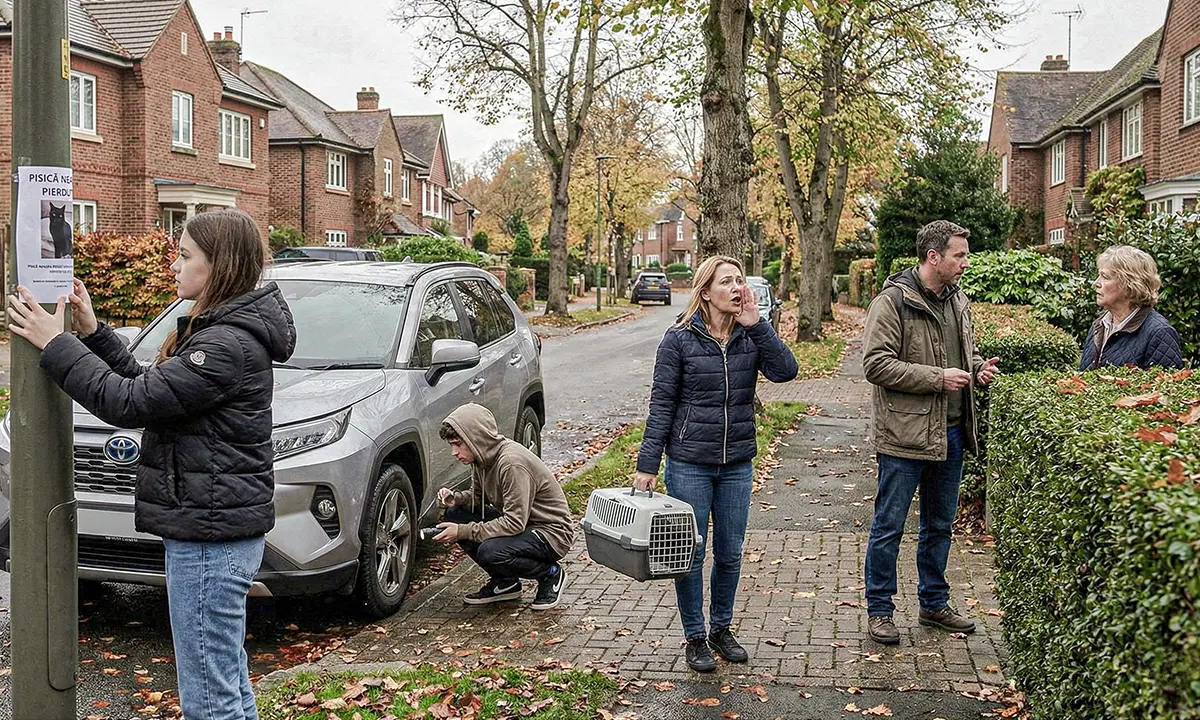
4. Notify neighbors and ask for access to enclosed spaces
Most cats cannot get out on their own from the place they enter. Therefore, it is vital to:
- Ask neighbors to check garages, cellars, sheds and keep an eye out – leave your contact phone number;
- Ask for access to basements or technical spaces;
- Post in the apartment building or neighborhood group;
- In apartment buildings, check trash chutes and technical rooms, as well as hallways and more secluded places, such as behind flowers, furniture stored in the hallway, etc.
A trapped cat does not meow constantly — some stay completely silent out of fear.
5. Post well-made ads
Include:
- Clear photos;
- Exact area;
- Large and visible phone number;
- Behavior: „scared / gentle / does not let itself be caught”.
Announce on:
- Local lost animal groups;
- Neighborhood groups;
- At veterinarians;
- On the street, in the area of disappearance.
Do not post on only one group — wide distribution increases the chances.
6. If the cat is skittish, use a capture cage
This is the method used by NGOs and veterinarians. Panicked cats will not let themselves be picked up, even if they are gentle at home.
The cage should be placed:
- In a secluded spot;
- With very smelly food (tuna, sardines, pate);
- And checked frequently.
It works especially at night.
7. Don’t give up too soon
Cats have been recovered after days, weeks, and even years.
Especially indoor ones have a strong „freeze” instinct — they stay hidden until they feel safe.
Perseverance is key. Even if you don’t see it, it is close by.
Conclusion
Losing a cat is a difficult emotional moment, but with the right steps and quick action, recovery chances are very high. Your cat is probably not far — just scared and hidden.
The most important thing is:
- To search close by, thoroughly and repeatedly;
- To notify the community;
- To use human-grade capture if necessary;
- To not give up.
Cats want to return home. We just have to guide them to safety.
Did you know that cats almost never need a bath?
Why bathing is not just unnecessary, but sometimes even harmful for them.
Many people believe that cats must be bathed to stay clean, but the truth is that they are among the most efficient animals when it comes to self-grooming. They clean their fur themselves, naturally, using a complex licking ritual that keeps their skin healthy and their coat in impeccable condition.
Cats spend as much as half of their time grooming. Through this ritual, they remove dirt, distribute the skin’s natural oils, and regulate their body temperature. When we wash them with water and shampoo, we strip away these essential oils, which can lead to dry skin, itching, and a dull coat.
Furthermore, for most cats, a bath is an intensely stressful experience. They are not used to water, noise, and excessive handling. The sensation of being held in an uncontrolled environment can frighten them, and repeated stress affects their emotional health. Additionally, drying them completely is difficult, especially for cats with thick fur, increasing the risk of colds or skin irritation.
In reality, there are very few situations where a cat needs a bath. Generally, a bath becomes necessary only in cases of:
- Contamination with toxic substances (oil, paint, gasoline, adhesive);
- Severe parasite infestation (when a veterinarian recommends a special shampoo);
- Dermatitis or conditions treated EXCLUSIVELY through therapeutic baths;
- Very old, obese, or disabled cats that can no longer groom themselves.
In any other case, there are much gentler and safer solutions: special pet wipes, dry shampoo, waterless foam, and regular brushing. All of these clean effectively without damaging the skin’s natural barrier.

Did you know that daily grooming also plays an emotional role for cats?
Licking isn’t just about cleanliness — it is their way of calming down, reducing anxiety, and maintaining their emotional balance. Bathing interrupts this natural ritual and can disrupt their well-being.
Conclusion
Not bathing a cat does not mean a lack of care. It means respect for its natural rhythm, its biology, and its real needs. Cats are, by nature, clean — and our role is simply to offer support, not to intervene unnecessarily.
Did you know that cats are much safer indoors than outdoors these days?
When it comes to our cats’ freedom, many voices argue that indoor life robs them of their adventurous spirit. But is that really the case?
Let’s explore together the realities that these adventure-loving beings face when the “outdoors” is no longer just a playground, but a landscape full of uncertainties and unexpected dangers.
An indoor cat can live a long and prosperous life, spanning 15–20 years, while a cat that spends its time outdoors faces challenges that can shorten its life to a maximum of 4 years. Therefore, the choice to keep a cat indoors is not about restricting freedom, but about protecting and extending its life.
Here are a few reasons why it is safer for cats to stay indoors:
- The risk of being stolen or injured is eliminated;
- They are protected from parasites and diseases;
- They avoid hidden dangers in enclosed spaces or exposure to extreme temperatures;
- They are not exposed to vehicle traffic or malicious individuals;/li>
- They avoid altercations with other cats or wild animals.
For those who fear that their cats will lose the joy of exploration and hunting, there are creative solutions. Indoor spaces can be adapted to provide cats with opportunities to play and burn energy, replicating nature’s experiences in a controlled way.
Conclusion
By choosing to keep cats indoors, we are not depriving them of freedom; we are offering them a safe and loving sanctuary, giving them a chance at a long and high-quality life. Indoors, they can lead a healthy life, free from the fears and dangers of the outside world.
Together, we can create an environment where our cats live happily, keeping their spirit alive and their curiosity satisfied—all within the safety of our home.
Did you know that a cat’s tipped ear carries a very important meaning?
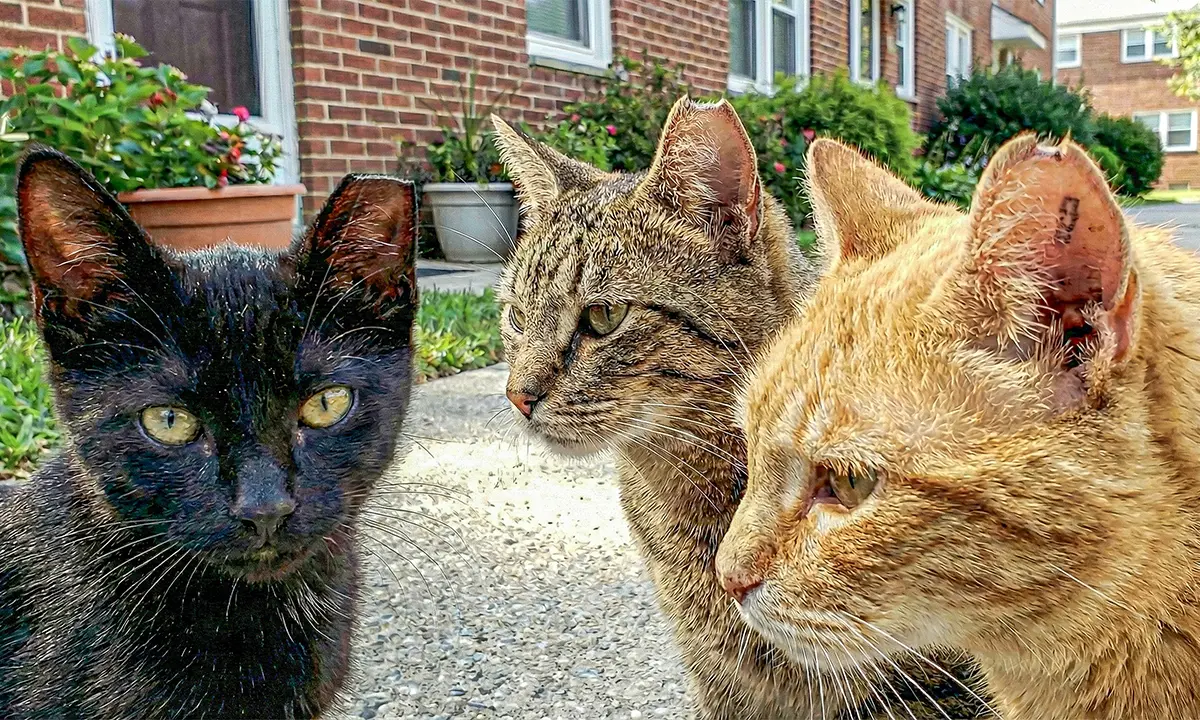
A small gesture, a big impact: ear-tipping for spayed/neutered community cats or those with outdoor access.
On the streets of our cities and villages, stray cats live their lives in a constant struggle for survival. Spaying and neutering is the most humane solution to give them a chance at a better life. But how can we identify those cats that have already been sterilized? The answer is simple and effective: „ear-tipping”!
In Romania, this practice is used in sterilization campaigns by veterinary teams. Ear-tipping is a painless procedure, performed under anesthesia during the sterilization surgery, resulting in no complications. However, in our country, the necessity and benefits of this method are not yet fully recognized, even though it is already a common practice internationally.
It is essential to educate the public, volunteers, and medical professionals about the importance of marking community cats as an indicator of sterilization.
As a painless procedure performed under general anesthesia, it not only avoids affecting the cats’ appearance but also guarantees them a safer life.
This visible mark is a symbol of hope and community care for these innocent souls. Through ear-tipping, we avoid the risk of repeated anesthesia and unnecessary surgical interventions, as well as the animal’s stress caused by trapping and transport to clinics.
Ear-tipping is a clear sign that the cat has been sterilized and will no longer contribute to the uncontrolled growth of the stray animal population.
It is vital to realize the importance of this practice and to promote it. Not only does it protect cats from additional risks, but it also helps streamline efforts to manage animal populations. A tipped ear doesn’t just mean a sterilized cat; it represents an animal saved from an endless cycle of reproduction and suffering.
Conclusion
When you see a cat with a tipped ear, you know it has been given a chance at a longer and healthier life. You can be certain that, through sterilization, it will no longer bring more helpless souls into the world. It is a sign of our collective compassion and commitment to a better world for all living beings.
Every tipped ear is a success story in our fight for a better future!
Did you know that when you find an injured cat on the street, you may be its only real chance at life?
A few weeks ago, we asked you how you proceed when you encounter an injured cat on the street.
Today, we are sharing the course of action we suggest and support in such cases.
First of all, we must analyze the severity of the situation and the context in which it occurs:
If the animal is in a public space and its condition is serious, it clearly must be picked up and taken to an emergency veterinary clinic. If time permits, it would be ideal to take a few photos or short videos to use later, but we will return to this part shortly.
If the animal is on private property, such as someone’s yard, or in an inaccessible space (drain, tree, balcony), it is recommended to contact the police at 112 and report the issue. The police and/or firefighters are required to intervene. Once again, photos and videos capturing the animal will be very useful later, no matter how distressed you may feel.
Before we get to the next step, it is important to understand that its life depends on you and the effort you are willing to put in to save it.
Once the animal arrives at the clinic, you might think the situation is resolved, but now only the first part of the rescue action is over.
Moving forward, regardless of the rescue context, it is advisable to submit a written report via email to the Animal Police and the local City Hall to bring the situation to their attention (you can find contact details on Google with a simple search, depending on the locality). Here, in addition to the detailed story of the case, you will add the videos and photos taken previously and your contact details. Such actions, although they may seem belated or “pointless,” are extremely important for making authorities aware of the countless cases of animals in danger around us and, in the long term, we hope they will be motivated to take concrete prevention and management measures.
Now that we’ve done our civic duty, we can focus on the next issue: how do we pay for the pet’s medical care costs at the clinic? Well, just like us, you will start using various methods on social media and beyond, making posts and even organizing fundraisers. Here, the photos and videos from before, along with those from the hospitalization period and the invoices, will play a crucial role once again. Through numerous posts explaining the situation and its severity, shared across as many animal-oriented groups as possible, you will surely succeed in raising, if not the full amount, at least part of the sum for paying the bills.
However, posts are not just for paying bills; once the cat is healed and the effort to help it has been made, you will surely want to ensure it never ends up in the same tragic situation again. Therefore, through more posts, starting even while the animal is hospitalized, you must begin searching for either adoption or temporary placement (foster care)—that is, if you don’t wish to give it a forever home yourself. You must also understand that from now on, this little soul’s life is entirely in your hands and, practically, you are the only ones capable of changing its destiny for the better. Thus, adoption conditions can be set so that you, first and foremost, are satisfied with the life the pet will have from now on (you can find adoption contract templates in groups or on Google).
This process of finding placement or adopters can take time, depending on the visibility of the posts, the conditions imposed, and many other factors, so you must be prepared to host the pet yourselves for a while if necessary. This might be seen as an inconvenience and can run into numerous obstacles, such as: “the landlord doesn’t allow pets,” “I already have other animals in the house,” or “I have never cared for an animal before.” Most of the time, any of these obstacles can be overcome once we think of all the effort put in up to that point, primarily because all these reasons can have a solution. If space doesn’t permit, give the animal at least a pantry or a bathroom; if even that isn’t possible, ask an association or a clinic for a metal crate or other suggestions, or ask your friends or acquaintances if they want to help.
This is, in broad terms, the path we must follow when we want to help an animal. This is what rescue work entails; this is what our work is all about.
Yes, it is a lengthy process, requiring effort, determination, commitment, and patience, but nothing compares to the feeling of inner satisfaction you feel once the cat has reached its new family. There is a moment when you look back at the first photos taken during the rescue and realize not only that it is alive because of you, but that the animal’s life has taken a remarkably happy turn solely because of you and those who stood by you every step of the way!
Remember, there are no management centers for stray cats, associations are always overcrowded, and you—the one whose heart is breaking right there in front of it—are most often the only one who can save that cat in need!
Concluzie
We want to see you getting involved and we are always here to support you, with advice or with the medical costs, if we can afford it, or even with a shoulder to cry on, because we fully understand the emotional strain that anyone who wants to help goes through.
We dream of a world in which each of us gets involved, we dream of a better world that only together we can create, one by one, cat by cat!
Is there more to a cat’s diet than just meat?
We often meet people who want to pamper their cats with something “special”. But did you know that a cat’s digestive system is very different from ours? Cats are obligate carnivores, which means their bodies are designed to obtain essential nutrients primarily from meat. Some foods that seem healthy for humans can, in fact, be very dangerous for cats.
Understanding the cat’s natural diet
Cats are obligate carnivores. This means that approximately 90–95% of their diet must come from animal-based proteins and fats.
Their bodies are adapted to process meat – not grains, sugar, or vegetables. Unlike humans or dogs, cats:
- cannot produce certain essential nutrients on their own,
- need a high protein, moderate fat, and minimal carbohydrate intake,
- have a digestive system adapted for hunting small prey (mice, birds, insects).
Essential nutrients found only in animal products:
- Taurine – vital for the heart, vision, and reproduction.
- Vitamin A – cats cannot convert it from plants; they get it only from meat.
- Arachidonic acid – essential for healthy skin and coat.
- Quality protein – for energy and maintaining muscle mass.
Without these nutrients, cats can quickly develop serious health problems: loss of vision, heart disease, liver damage, or general weakness. That’s why meat (chicken, beef, rabbit, lamb, turkey, fish, etc.) must be the core ingredient in any complete and balanced cat food.
What’s behind the label?
Have you ever noticed canned food or pouches for cats that mention pumpkin, cranberries, psyllium, tuna, chicken broth, carrot, or zucchini?
You may have wondered: Why would a cat eat something like that if it’s a carnivore? Although most of the diet must come from meat, small portions of vegetables, fruit, or fiber can be useful for digestion, hydration, or variety.
Safe and beneficial foods for cats
Why meat variety matters
On labels you can see different types of meat: chicken, beef, lamb, rabbit, duck, game, fish. It’s not just marketing – it’s nutritional science. Each type of meat offers different combinations of amino acids, fats, and minerals.
Safe types of meat
- Chicken / turkey – lean meat, easy to digest.
- Beef / lamb – rich in iron and zinc.
- Rabbit / duck – ideal for sensitive or allergic cats.
- Fish (salmon, sardines, trout, tuna) – adds Omega-3 fatty acids, good for skin and coat.
How to serve at home
- Always boiled or steamed, without salt, oil, or seasoning.
- Cooked bones can splinter – never offer them.
- Raw meat only on a veterinarian’s recommendation (risk of bacteria).
- It’s recommended to rotate meat types to avoid intolerances.
Recommended amount (as a supplement)
- 1–2 tablespoons of cooked meat, a few times per week, as an addition to a complete food.
- It does not replace main meals.
- Boiled chicken breast, shredded, is an excellent and safe treat.
Organs – the cat’s “natural vitamins” (in moderation)
- Chicken liver – rich in vitamin A and iron, but in small amounts. Too much can cause toxicity.
- Chicken heart and gizzard – excellent sources of taurine, zinc, and B vitamins.
- Kidneys – contain useful minerals, but must be well boiled.
Amount: a teaspoon as a reward, or up to 10% of the diet if the rest is complete food.

Fish (only cooked, never raw)
- Cats love fish – and for good reason: it’s rich in Omega-3 fatty acids, which support the health of the skin, coat, and joints.
- Recommended types: salmon, sardines, tuna (for cats only), trout, cod.
- How to serve: cooked, without oil or seasoning.
To avoid:
- Raw fish (contains thiaminase – destroys vitamin B1).
- Salted or smoked fish or canned fish for humans.
- Too much tuna (possible heavy metal content).
How often?
- Rotate fish species and occasionally offer a “fish-free week”.
- “Fish is wonderful for cats – but only when it’s part of a varied diet.”
- Fish can make up a maximum of 25–30% of the total diet.
- Combine it with other meat types (chicken, beef, lamb).
- Avoid: raw, salted, smoked fish, fish preserved for humans, excessive tuna.
Healthy treats
Instead of human food scraps, try these safe and nutritious options:
- Small pieces of boiled chicken or turkey;
- A teaspoon of plain pumpkin puree;
- Pureed carrot, green beans, or cooked sweet potato;
- A few flakes of cooked salmon;
- Freeze-dried meat treats (100% single ingredient);
- Cat grass or catnip for fun.
-
Chicken bone broth – a natural way to stay hydrated
One of the healthiest and most natural ways to encourage fluid intake is homemade chicken bone broth. It’s ideal for older, picky cats or cats with kidney sensitivities.
How to prepare:
- Simmer chicken bones slowly for a few hours, until the liquid becomes clear and rich in collagen.
- After it cools, you can:
- Pour it over wet food for aroma and hydration,
- Freeze it in ice cube trays and gently warm as needed,
- Serve at room temperature (never hot).
Benefits:
- Supports hydration,
- Promotes joint health (contains collagen and natural glucosamine),
- Improves digestion and appetite.
Do not add salt, onion, garlic, herbs, or oil — they are toxic to cats. The broth should not replace meals — it’s a supplement, not a complete food.
-
Eggs (boiled only)
- An excellent source of protein, amino acids, and B vitamins.
- Avoid raw eggs – they may contain Salmonella and enzymes that reduce biotin absorption.
Amount: ½ teaspoon, occasionally.
-
Pumpkin
- Helps in both constipation and diarrhea thanks to its gentle fiber content.
Amount: ½–1 teaspoon, a few times per week, especially for long-haired cats (prevents hairballs).
-
Psyllium husks (in small amounts)
- Regulates intestinal transit, but only on a veterinarian’s recommendation.
- Always mix with wet food and water.
Amount: very small amounts, according to the veterinarian’s recommendation.
-
Cat grass (grown from special seeds)
- Cat grass (usually wheat, oats, or barley) is safe and helps naturally eliminate fur balls.
- Satisfies the instinct to chew greens without the risk of toxic plants.
Amount: mixed with food a few times per week.
-
Small amounts of lactose-free dairy products
- Some cats enjoy a teaspoon of plain lactose-free yogurt or cheese, which provides calcium and probiotics.
How much: very small amounts, according to the veterinarian’s recommendation.
-
Sweet potato (cooked, plain)
- Provides fiber, beta-carotene, and a mild sweetness that some cats appreciate.
- Must be fully cooked and mashed — never raw (raw can irritate the stomach).
amount: very small amounts, according to the veterinarian’s recommendation.
-
Carrots (cooked or steamed)
- Rich in vitamin A and antioxidants.
- Cats can’t efficiently convert plant beta-carotene into vitamin A, but a little cooked carrot adds texture and variety.
Amount: very small amounts, according to the veterinarian’s recommendation.
-
Green beans, peas, and broccoli
- Low-calorie vegetables with lots of fiber, useful for overweight cats.
- Cooked green beans or peas help digestion and provide vitamins A, C, and K.
- Avoid canned beans (too much salt).
Amount: very small amounts, according to the veterinarian’s recommendation.
-
Cucumber and zucchini
- Mostly made up of water — good for hydration in warm weather.
- Some cats prefer them as crunchy snacks.
Amount: very small amounts, according to the veterinarian’s recommendation.
-
Apple (peeled and cored)
- A few small pieces of peeled apple can provide fiber and vitamin C.
- Remove the seeds and core — they contain cyanide compounds and are toxic.
Amount: very small amounts, according to the veterinarian’s recommendation.
-
Watermelon (seedless)
- Cats don’t need fruit, but a small cube of watermelon can hydrate and cool them down.
- Always remove the seeds and rind.
Amount: very small amounts, according to the veterinarian’s recommendation.
-
Water, water, water! – Hydration is essential
Cats don’t naturally drink enough, so hydration is crucial.
Always ensure:
- Fresh, clean water daily.
- Wet food for additional fluid intake.
- Water fountains — many cats prefer moving water.
Foods to avoid – toxic or dangerous
These foods should never be given — even small amounts can be harmful or fatal:

-
Salty or spicy foods
Cats are sensitive to salt — excess can cause dehydration, vomiting, or kidney stress.
-
Bread, pasta, and carbohydrates
Cats don’t get nutrients from carbohydrates and may develop obesity or diabetes.
-
Cooked bones
Never give cooked bones — they can splinter and cause choking or internal injuries.
-
Chocolate, coffee, and tea
Contain theobromine and caffeine — can cause arrhythmias, tremors, or seizures.
-
Grapes and raisins
Even small amounts can cause acute kidney failure.
-
Onions, garlic, chives, leeks
They destroy red blood cells and cause hemolytic anemia. Cooked or raw — both are dangerous.
-
Sweets and artificial sweeteners
Sugar causes obesity and dental problems.
Xylitol (sugar-free gum, candies) causes liver failure and hypoglycemia.
-
Milk (regular cow’s milk)
Most adult cats are lactose intolerant — milk causes diarrhea, bloating, and gastric discomfort.
-
Indoor plants and flowers
Common plants such as lilies, tulips, aloe vera, ivy, philodendron, poinsettia, and daffodils can be extremely toxic.
Grow only grass or herbs that are safe for cats.
-
Medicines for humans
Paracetamol (acetaminophen) and ibuprofen are deadly for cats — they can cause liver failure and internal bleeding.
Never give human medications without a veterinarian’s instruction.
-
Alcohol and raw dough
Even small amounts of alcohol or fermented yeast dough cause ethanol poisoning. Symptoms: vomiting, tremors, coma.
-
Dog food
Not toxic in the short term, but it doesn’t contain enough taurine, arachidonic acid, and protein for cats.
Regularly feeding dog food leads to malnutrition and heart disease.
When in doubt – ask your veterinarian
If your cat has eaten something unusual or shows symptoms like vomiting, drooling, weakness, or refusing food – call your veterinarian immediately.
Cats are small and metabolize toxins much faster than humans, and quick intervention can save lives.
“Complete” vs. “Complementary” – understand the difference
On cat food labels you may see two terms: complete food and complementary (supplementary) food. They seem similar, but the difference is very important. In short:
Complete
Main meal. Provides all nutrients needed daily – proteins, fats, vitamins, minerals, taurine. Can be offered as the only food source.
Complementary
Treat / topper. A treat or supplement with high meat content, but without all required nutrients. Combine with complete food or offer occasionally.
Although complementary food may contain nice pieces of meat or fish, it does not have essential vitamins and minerals. It can be added on top of complete food, but it can never replace it.
For those who prefer simplicity – trust the label
If all these details seem complicated, you’re right: feline nutrition is complex!
The safest choice is to offer complete and balanced food from trusted manufacturers, who formulate recipes under veterinary supervision.
This way, your cat gets all the benefits – without risks.
Conclusion
So yes — it’s possible to see pumpkin, blueberries, cranberries, chicken broth, or fish mentioned on cat food labels or recommended by veterinarians online — and now you know why.
Feeding your cat correctly is one of the best forms of affection.
Remember: “If it isn’t made for cats — always check before offering.” Each of these ingredients can be beneficial, but only in the right proportions.
With balance, care, and awareness, any cat can have a long, healthy, and happy life. A healthy cat needs a complete, meat-based diet, occasionally enriched with safe vegetables, fruit, or fish. The benefits appear only when they are scientifically balanced with the right nutrients and proportions.
If you want to add them yourself, do it with caution, rarely, and in small portions.
Did you know that some apparently minor signs can hide a veterinary emergency?
Cats are masters at hiding their suffering. In nature, a sick animal becomes vulnerable, which is why today’s domestic cat instinctively masks pain or discomfort.
This means that when you observe a change in behavior, appetite, or posture, it is essential to take it seriously. Sometimes, a few hours can make the difference between life and death.
Signs indicating a real veterinary emergency
Open-mouth breathing or breathing difficulties
Could be
Reaction to heat, stress, or intense play – but if it persists, it may indicate more serious problems.
What to do
If it lasts more than 1–2 minutes or the cat seems exhausted → go urgently to the vet.
If it appears occasionally after stress/play → calm the environment and offer various hydration methods (multiple bowls with fresh water, a fountain, wet food).
Extreme lethargy or lack of reaction
Could be
Sign of shock, organ failure, severe anemia, hypothermia, intoxication. The cat does not respond, does not get up, does not eat.
What to do
Immediate veterinary intervention. Every hour counts.
Repeated vomiting or vomiting blood
Could be
Obstruction, pancreatitis, intoxication, parasites, or foreign body. Drooling, nausea, weakness also appear.
What to do
If there are ≥2 episodes in a few hours and blood/weight loss appears or it happens daily over a period of a few days → go to the vet as soon as possible.
If the cat eliminates undigested food → try to portion the food, it most likely ingested a large amount of food quickly; if this does not solve the problem, make an appointment with the doctor to discuss other possible solutions or necessary investigations.
If it appears occasionally, every few months and contains hairballs -> it is a normal mechanism for eliminating fur gathered through grooming; if it appears multiple times in a month, try to help the cat by brushing it regularly at least for a while, but if the cat grooms excessively, try to observe what potential stress factors might be in the environment.
Inability to urinate / urinating with blood
Could be
-
In males, it can be a complete urinary blockage – a serious condition that can lead to death in 24–48h due to toxin accumulation.
-
In females, blockages are rarer; usually, it involves urinary infections, idiopathic cystitis, or urinary crystals, which are NOT immediate vital emergencies but require rapid treatment.
-
Sometimes, the cat is not blocked but just frequently feels the need to urinate (pollakiuria), staying in the litter box for a long time or going often outside of it – a sign of inflammation or discomfort.
What to do
If the cat repeatedly stays in the litter box but eliminates no urine at all, meows in pain in or near the litter box, or seems listless and weak → go immediately to the vet – every hour counts.
If the cat eliminates urine but very little, drop by drop, and visits the litter box often, meows, and seems in constant discomfort -> make a vet appointment within the next 24-48h, requires specialist check-up and probably treatment/diet.
If you notice just a change in litter box behavior (e.g., hesitation, staying longer, modified smell) → monitor behavior for 24–48h, ensure access to fresh water, reduce stress and keep a clean litter box, and if symptoms persist or worsen → vet consult.
Uncontrolled bleeding
From the nose, gums, rectum, or from wounds that won’t stop.
Could be
Coagulation disorders, intoxications (e.g., rodent poison), or internal trauma.
What to do
Apply light pressure if possible and go urgently to the vet.
Seizures, unbalanced walking, tremors
Could be
Sign of neurological condition, brain trauma, or intoxication.
What to do
Protect the cat (soft blankets) so it doesn’t hit itself, do not touch it during the seizure, then go immediately to the vet.
Ingestion of toxic substances
Plants (e.g., lilies), chocolate, onion, paracetamol, cleaning products, human medicines.
What to do
o to the vet immediately, with the substance packaging or a sample. Do not induce vomiting without professional indication.
Obvious pain
The cat cries, avoids touch, hides, walks abnormally, trembles.
What to do
DO NOT force it to come out, do not manipulate the painful area. Contact the vet.
Other symptoms – signs of concern (monitoring + consult if lasting > 24h)
| Symptom | Possible causes | Recommended action |
|---|---|---|
| Not eating at all | Dental pain, fever, systemic disease |
Monitor; if > 24h → consult. |
| Diarrhea (without blood) | Diet, parasites, stress |
Hydration, if > 48h → consult. |
| Dry cough | Allergies, irritations, asthma |
Consult in a few days if it persists. |
| Unexplained weight loss | Chronic diseases, malabsorption |
Medical consult and tests. |
| Abnormal swellings | Abscesses, tumors |
Veterinary evaluation as soon as possible. |
| Cooing/excessive meowing | Pain, frustration, hyperthyroidism |
Observation + appointment. |
What to do in an emergency?
-
Do not wait for it to pass. Cats can seem “better” even when in a serious condition – it is not a sign of real recovery.
-
Call the vet immediately or go to a NON-STOP clinic.
-
Do not administer human medicines. Many are toxic to cats!
-
Take samples if you can (e.g., vomit, ingested plants, medicines, etc.) or film/photograph the symptoms, behaviors for diagnosis.
Conclusion
Any sudden and unexplained change in your cat’s behavior can signal a serious problem. By being attentive to subtle signs and acting quickly, you can save your furry companion’s life.
Always keep an eye on details. Better a “false” visit to the vet than a delayed reaction.
Did you know that sterilization saves lives?
Over time, arguments against cat sterilization have accumulated, often built on an idyllic image of kittens alongside their mother in a perfect environment. Realities are, unfortunately, different: thousands of unwanted kittens end up in the care of NGOs, on the streets, or are abandoned in dramatic conditions annually. Sterilization is, in this context, an act of responsibility and empathy.
The realm of myths, step by step:
“I want it to feel alive” / “I want it to have fun”
Reproduction in cats is an instinctive process, not an act of pleasure. Females in heat are often agitated, restless, and vulnerable, and the act itself is often painful and traumatic. The “fun” invoked by people is a human projection—cats do not live with the desire to have kittens, but merely respond to a short-term biological impulse.
“I’ll let her have kittens because I’ll take care of them”
Even with the best intentions, kittens often end up in unprepared families, left unsterilized, and quickly contribute to cat overpopulation. Statistics show that a single pair of unsterilized cats can generate up to 420,000 descendants in just 7 years. The sad reality is that most of these kittens will not find a safe home, and 80% do not even reach their first year of life, perishing due to disease, starvation, or accidents.
“Sterilization is torture”
Currently, sterilization is a standard intervention, performed under safe conditions, with adequate anesthesia and analgesia. Recovery is rapid—most cats return to normal behavior within 24–48 hours. The benefits for health and emotional balance far outweigh the temporary postoperative discomfort.
“They gain weight after sterilization”
Sterilization can slightly modify metabolism, but it does not automatically determine weight gain. Sterilized cats need fewer calories, but with an adapted diet and daily physical stimulation, they will remain healthy and supple. Sedentariness and excessive food are the true risk factors.
“I won’t sterilize her because I don’t let her out”
Even exclusively indoor cats benefit from sterilization. Unsterilized females can suffer from pyometra (a serious, often fatal uterine infection), mammary tumors, or ovarian cysts. Males can become aggressive, mark territory, and are affected by hormonal stress. Sterilization prevents all of this.
“I’ll sterilize her after the first litter”
There is no medical benefit in letting a cat have a “litter” before sterilization. On the contrary: early sterilization (around the age of 6-9 months) drastically reduces the risk of mammary cancer and eliminates the risk of pyometra.
“It’s natural not to sterilize”
Letting animals reproduce freely is indeed natural—but natural is also the suffering, starvation, and death of abandoned kittens. Nature does not offer protection or comfort. Our role, as humans, is to intervene ethically, to reduce unnecessary suffering.
“Sterilization changes their personality”
A cat’s personality is not determined by sex hormones. On the contrary, after sterilization, most become more balanced, calmer, and more affectionate. Territorial marking behaviors, excessive vocalizations, and aggression determined by sexual rivalry disappear.
“My cat is special, I want a kitten from her”
All cats are special—but that doesn’t mean we must breed them. Cats do not develop a deep emotional relationship with their own kittens, and their “legacy” is not passed down through reproduction. If you want to honor your cat’s uniqueness, offer her a long and healthy life, not an unnecessary pregnancy.
Conclusion
We dismantle myths, but above all, we care. Sterilization is NOT an act of cruelty, but one of compassion, responsibility, and long-term vision. It is a small gesture that saves hundreds of lives. By sterilizing, you do not only do good for your cat. Faci un bine comunității. You do good for the community. And you change the world a little bit more.
Choose to be part of the change. Choose responsibly. Choose to sterilize.
Did you know that supermarket food is putting your cat at risk?
Why should we avoid supermarkets when buying food for our pets?
We often hear people say they feed their pets food bought from regular shops or supermarkets. Let’s explore why this is not recommended by specialists and what risks you may be exposing your pet to if you don’t pay attention to the ingredients:
Low ingredient quality: Pet food sold in supermarkets or corner shops often contains low-quality ingredients, such as meat from unknown sources or meat derivatives, fillers, and cheap grains.
Avoid vague labels with terms like “meat derivatives” and choose clear meat sources such as chicken, beef, or fish. Cats do not need grains in their diet, as these can be difficult to digest and may lead to allergies and digestive issues. Avoid labels that list wheat, corn, or other grains among the first ingredients.
Price doesn’t always reflect quality, and often more expensive products may contain lower quality ingredients than expected. Don’t skip reading the ingredient list — make an informed choice when buying food for your pets.
Additives and preservatives: Many supermarket products contain artificial additives and preservatives, which can be harmful to pets. Words like BHA, BHT, ethoxyquin, or artificial colours should raise red flags. These chemicals may cause allergies, food intolerances, and other health issues. Sugar has no nutritional value for pets and can contribute to obesity, diabetes, and other health problems, so it should not appear on the label. Similarly, excess salt can lead to high blood pressure and kidney issues.
Lack of expert advice: Supermarket staff are generally not trained in pet nutrition or animal health, making it difficult to find appropriate advice or products tailored to your pet’s specific needs.
The better alternative: specialised pet shops, vet clinics, and veterinary pharmacies!
We always warmly recommend choosing, whenever possible, specialised pet shops or vet clinics and pharmacies. These places offer high-quality products tailored to the nutritional needs of pets, with fibre-rich diets and certified-origin ingredients. Moreover, if the staff is knowledgeable, they can give reliable advice regarding your pet’s diet based on age, energy level, price/quality ratio, and other factors you might care about.
Reading the label is key!
No matter where you buy food for your furry friend, it’s crucial to read the label carefully. Make sure the food you choose contains high-quality ingredients from safe sources and is suited to your pet’s specific needs.
Special diets for medical conditions when needed
Pets with kidney, gastrointestinal, liver, or urinary problems may require a special diet — and these are just a few examples. In such cases, your veterinarian is the go-to expert to help you find the right food that meets your pet’s individual health needs.
Concluzie
Be mindful of what you choose for your pets and always opt for the highest quality food! A proper diet is key to a long life without unpleasant medical surprises!
Did you know that there are a few steps to follow before bringing (another) cat home?
Think of bringing a cat home as the beginning of a joyful and affectionate new adventure — one guided by responsibility and respect! To ensure your new family member starts this new life successfully, we recommend carrying out some checks and preparations before their arrival.
Veterinary check-up
The first and most important step is a visit to the vet. This initial check-up is essential to assess the cat’s health and identify any underlying conditions. The vet will perform a full physical examination during a routine consultation.
In addition, they may recommend specific rapid tests, including FIV and FeLV testing to detect viruses that affect the immune system, and tests for giardia, panleukopenia, and coronavirus if gastrointestinal symptoms such as diarrhoea or vomiting are present. The vet will also administer internal and external deworming treatments, followed by core vaccinations and the rabies vaccine at the appropriate time. All of this forms part of routine disease prevention in cats.
Prepare the necessary accessories
Ensure you are ready for all your cat’s basic needs. This includes a litter box with litter, food and water bowls, a cosy bed, and toys to stimulate both body and mind. Don’t forget to secure your windows with safety nets as a precaution. Creating a safe, comfortable, and loving environment will help your cat feel welcomed and happy in their new home.
Quarantine period
If you already have pets at home, it’s recommended to keep the new family member in quarantine for at least two weeks before introducing them. This is an important precaution to prevent disease transmission and allow the new cat to adapt to their new surroundings. During quarantine, make sure the new feline has their own litter box, food and water bowls, and a safe, comfortable resting area. Avoid sharing litter scoops, bowls, or leftover food with other pets, as these are common sources of cross-contamination.
Gradual introduction
When it’s time to introduce your cats, take a gradual and patient approach. Start by exchanging scents using towels or toys swapped between them. Then allow supervised interactions, without forcing contact.
Even if progress seems slow or if initial conflicts arise, trust that the animals will eventually find a way to coexist peacefully. As interactions become more positive, encourage joint play and exploration, but intervene if there are signs of stress or conflict. Be ready to offer separate spaces where each cat can retreat and feel safe, if needed.
The adjustment period varies by individual — in some cases, it may take 3–6 months. If you feel you need help with introductions, consider consulting a professional in animal behaviour.
Using synthetic feline pheromones, or calming herbs like valerian or catnip, may also help reduce tension and stress, and promote positive behaviour during the introduction phase.
Remember to always be patient and trust the process of adaptation. Each cat will react differently and require time to adjust to the other’s presence. With persistence, their relationship can grow into a deep, lasting companionship based on mutual respect and understanding.
Conclusion
In conclusion, regular vet visits during the early stages, along with proper preparation before bringing a cat home, are vital for their health and happiness. These steps will create the right environment for a smooth and successful integration into your family — helping you embark confidently on an exciting new journey with your purring companion!
Did you know that your home could be hiding unsuspected dangers for a cat?
As we enjoy the presence and companionship of cats in our homes, it is essential to be aware of some unexpected dangers that could threaten their health and safety.
Here are a few lesser-known yet truly important points we should all keep in mind:

Hair ties and household elastics
Hair ties and household elastics, though small and seemingly harmless, can become life-threatening if ingested by your cat. These items can easily be swallowed and cause digestive issues or even intestinal blockages. It’s important to keep them out of your cat’s reach, even if your cat doesn’t usually show interest — their behaviour can be unpredictable when left unsupervised.
Candles and open flames
Candles and open flames are another risk to watch out for. A curious cat might approach a flame and, while playing, could cause a fire or suffer serious burns. Even singeing their whiskers, which may seem minor, can affect their balance and orientation. Always supervise or extinguish such sources of fire when not present.
Open windows
Open windows can pose a significant danger, especially for curious cats who love to explore. Safety nets installed on windows can prevent accidental falls and protect cats from serious injury or even death. Not only unsupervised open windows but also tilted ones can trap a cat, risking spinal or limb injuries and increasing the chance of fatality.
Human food
Some human foods are toxic to cats, so sharing meals with them should be avoided unless you are well-informed. Dairy, chocolate, coffee, smoked meats, onions, garlic, grapes, avocado, and many others can cause digestive issues or severe poisoning. Cats should not be allowed access to human food, including leftovers. Harmful scraps include bones or packaging and casings from processed meats.
Certain plants
Houseplants and flower bouquets can cause immediate severe reactions and even death shortly after contact or ingestion.
Examples of toxic plants include: lilies, oleander, lilac, dieffenbachia, tulips, daffodils, and many others.
So, before offering flowers or potted plants to families with cats, check their toxicity using trusted veterinary sources.
Loud noises
Loud noises like fireworks, speeding vehicles, or noisy construction sites can be extremely stressful for cats. During holidays with fireworks or street celebrations, it’s important to take extra precautions. Keep your cat indoors, close windows and doors, and play ambient music to help soothe them. If your cat is particularly sensitive or has heart issues, consult your vet about anxiety medications.
Incense sticks, air fresheners, and cigarette smoke
Incense sticks and air fresheners may release toxic compounds that can cause respiratory issues, vomiting, or other conditions in pets. Limit your cat’s exposure to these products and use safer alternatives for freshening your home. Cigarette smoke is especially toxic and harmful, causing severe respiratory conditions or even cancer.
Cleaning products
Cleaning products can be hazardous to cats if ingested from treated surfaces or if they inhale the vapours in confined, unventilated spaces. Chemicals in these products can cause poisoning, digestive and respiratory irritation, itching, or severe allergies. Always store such products in cat-proof places and use non-toxic cleaning alternatives whenever possible.
Inadequate transport
When transporting your cat, it’s your responsibility to ensure the carrier or crate is intact and secure, preventing any chance of escape. Even if travelling by car, never let your cat roam freely inside. Such irresponsible actions risk the cat’s life (which could escape or fall in a split second) and endanger others if the driver is distracted or startled.
Conclusion
Caring for a cat involves much more than feeding and play. With a little attention to detail, you can ensure your home is a safe haven for all family members. We must stay aware of all potential risks, even the subtle ones, and take appropriate precautions to safeguard the health and safety of our feline friends. That’s why we encourage you to share this information with other cat lovers in your life!
Did you know that your cat has certain needs to stay healthy and happy?
If you’re a cat parent, you’ll definitely want to know how to keep your cat happy and active for as long as possible. Here are some useful tips to provide your cat with a friendly and engaging environment:
Safety first
It’s recommended to remove toys from the room after a play session and store them safely — firstly, to maintain the cat’s interest in the toy, and secondly, to avoid leaving them unsupervised. Cats can swallow certain toy components (such as feathers, strings, plastic or fabric parts) and must be supervised to prevent such incidents.
Balconies and windowsills can become relaxing spots for sunbathing and observing the outdoors, as long as they are secured with special nets and the cat isn’t exposed to the risk of falling or running away. Toxic plants are another hazard that should be removed and replaced with non-toxic alternatives (more details in a separate article).
Human interaction
Cats love spending time with you, so it’s advisable to dedicate daily time for interactions, sharing energy together. This not only keeps them active but also strengthens your emotional bond.
Healthy and balanced diet
The quality of your cat’s diet is crucial for their health. A balanced diet rich in essential nutrients supports healthy development, a shiny coat, and a strong immune system. High-quality food prevents digestive issues and nutrition-related diseases, ensuring your cat enjoys a longer, healthier life. Consult a vet for personalised dietary advice.
Regular vet visits
Routine vet visits are essential for your cat’s health, helping with early disease detection, health monitoring, dental care, and keeping vaccines and treatments up to date.
These visits also allow vets to provide tailored advice on nutrition and care, ensuring a long and healthy life for your cat.
Physically and mentally stimulating environment
Ensure your cat has access to a variety of toys, such as jingly balls or feather-and-string toys, to stimulate hunting instincts and keep their mind alert. Use interactive toys to encourage jumping and chasing.
You can also enhance your cat’s space by adding tall structures, shelves, and wall-mounted platforms to make the environment more engaging. Interactive puzzle toys are especially beneficial for encouraging natural instincts and require attention and dexterity to unlock the treat inside.
Physical activity is essential for felines; it aids digestion and reduces obesity risk by up to 30%, making it especially vital for indoor cats. Make sure your cat has frequent opportunities to play and move. After each active play session, cats can be rewarded with treats, creating a routine that encourages them to stay active and interested in toys and interaction.
Conclusion
Caring for a cat involves a mix of mental stimulation, physical activity, human interaction, and proper nutrition. With care and love, you’ll enjoy the company of a happy, healthy cat for many years to come. So grab those fishing rods and let the adventure begin!
References
-
Cecchetti, M., Crowley, S. L., & McDonald, R. A. (2021). Drivers and facilitators of hunting behaviour in domestic cats and options for management. Mammal Review, 51(3), 307-322.
-
Dantas, L. M., Delgado, M. M., Johnson, I., & Buffington, C. T. (2016). Food puzzles for cats: feeding for physical and emotional wellbeing. Journal of feline medicine and surgery, 18(9), 723-732.
-
Haywood, C., Ripari, L., Puzzo, J., Foreman-Worsley, R., & Finka, L. R. (2021). Providing humans with practical, best practice handling guidelines during human-cat interactions increases cats’ affiliative behaviour and reduces aggression and signs of conflict. Frontiers in Veterinary Science, 8, 714143.
Did you know that abandoned kittens can survive?
Although the best scenario for both the mother cat and her kittens is to stay together, we have a few tips to give a chance to those less fortunate. If the mother is not around, their chances of survival are nil without our intervention.
Assessing the situation
First, ensure that the mother cat is not nearby. If the kittens are found discarded in packaging (bin bags, dumpsters, hung in trees, boxes, etc.), it can be assumed that they were abandoned and the mother is not present. However, if the kittens are found by the roadside, under a bush, in a cellar, or hidden away, it’s important to wait and see if the mother is around, in which case the whole family can be rescued.
Kittens must be dry, clean, and kept at an optimal temperature
Kittens begin to regulate their body temperature at 3–4 weeks of age. Without a heat source, they may die. A warm water bottle in their bedding is the most accessible solution. Warning: if the water is hot, wrap the bottle in a towel or blanket. If the kittens are wet, dry them thoroughly with a towel.
Next, check for larvae (in ears, nose, genital area, paw folds, or fur). Newborn kittens without a mother to groom them are targets for flies, and the danger posed by larvae increases by the hour. If infested, kittens must be cleaned under veterinary supervision. If it’s late or no vet is available, animal welfare groups can be a true lifesaver.
Feeding
A newborn kitten must be fed every 2 hours, day and night. Kitten milk formula is the safest option. From our experience, Royal Canin milk gives the best results, followed by Brit or Lactadiet.
The greatest danger in feeding a newborn kitten is aspiration of milk into the lungs. Therefore, use a special kitten bottle with a properly sized nipple. Feed the kitten in a horizontal position, with paws down — NOT on its back and NOT upright — and monitor swallowing (gently touch under the chin to check for the swallowing reflex).
Prepare formula as per instructions on the packaging, ensuring it’s well mixed and served warm. Important: never feed a street-rescued kitten before warming it up, as the risk of choking is very high!
*If the kittens are found at night or outside veterinary/pharmacy hours and you cannot get milk or a special bottle, again, animal welfare groups are a good alternative for help.
Feeds can be spaced out as the kitten starts eating more. By week 2, feed every 3 hours; by week 3, every 4 hours including at night. From weeks 3–4, they can go 6–7 hours overnight without feeding, and weaning can begin.
For early weaning (3–4 weeks) when necessary, use a special kitten pâté. From our experience, Royal Canin’s “Mother and Babycat” mousse is the best option. It is very important not to feed any other wet food (not even kitten varieties) to help the digestive system adjust and avoid complications. At first, offer small tastes at each meal and gradually transition from milk to pâté. After 6 weeks of age, you can introduce other wet and even dry kitten foods.
Toileting
Kittens cannot relieve themselves without help and must be stimulated. For abandoned kittens, you’ll need to do this using toilet paper, cotton pads, or soft, fragrance-free baby wipes to prevent irritation. Stimulate before and after each feed. If they soil themselves, clean them with a baby wipe and replace their bedding. Their environment, skin, and fur should always be dry and clean.
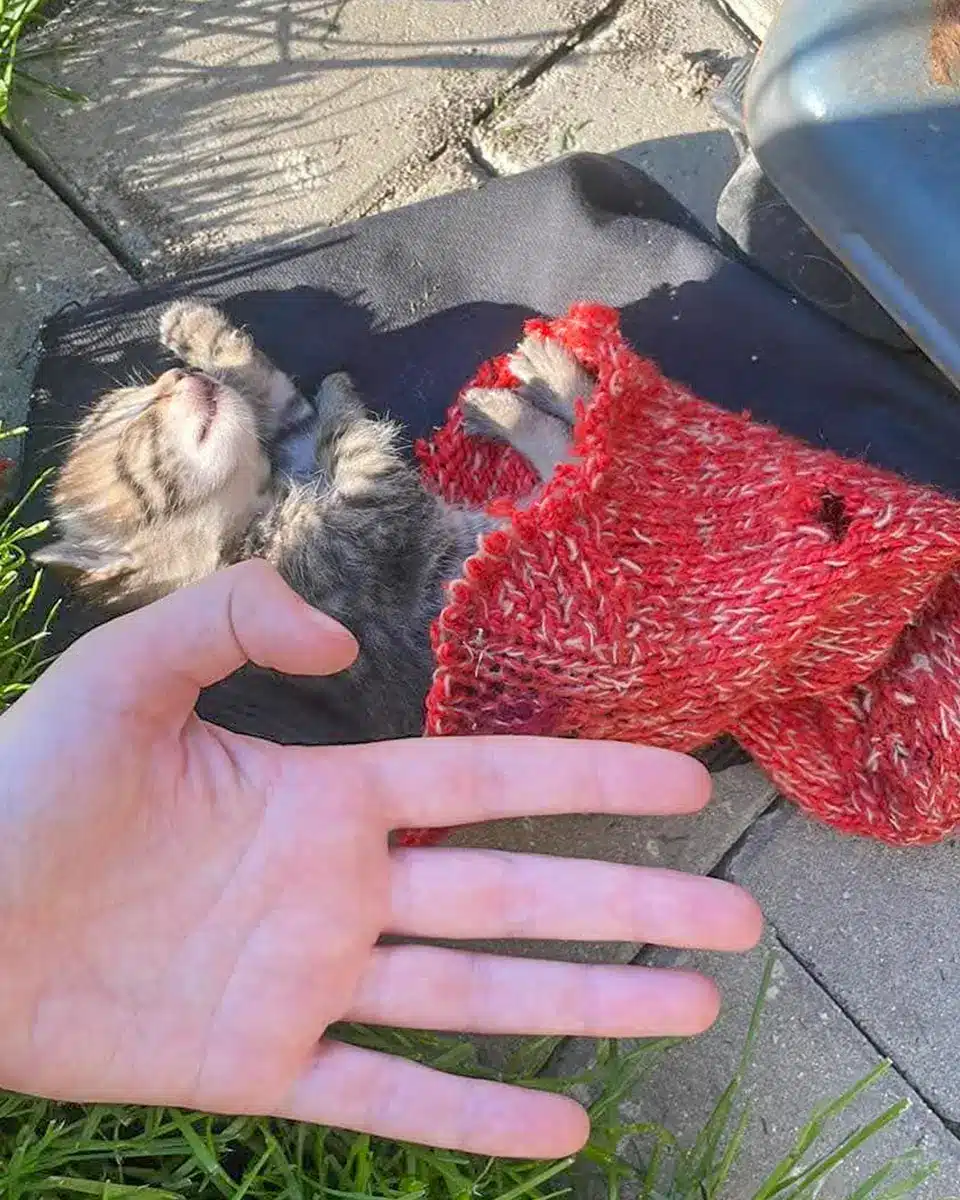

Conclusion
With dedication, attention, and perseverance, raising a kitten is an experience anyone can take on. ‘The first time is the hardest,’ but with the right steps, this journey becomes a delightful experience from the kitten’s first days to adulthood.
Did you know that some plants are toxic to your cat and can even cause death?
Cats are naturally curious, which means they may come into contact—accidentally or not—with household plants. The concern here is that some plants can be potentially dangerous to their health, and a few can even cause death within just a few hours of ingestion.
To prevent poisoning, it’s important to consider the cat’s natural curiosity and take measures to protect them!
This guide provides a summary of plants that are risky for cats, the typical symptoms of poisoning, and necessary first aid measures. It also offers tips to avoid accidents and create a safer environment for our feline companions.
Knowing this information is essential for any responsible cat owner.
Dangerous plants for cats

Common species that can be fatal: lilies, oleander.

Species that may cause vomiting, diarrhoea, breathing difficulties, lethargy, seizures, tongue swelling: rhododendron, tulips, daffodils, laurel, poinsettia, orchid, ZZ plant, lilac, lily of the valley, hyacinths, aroids, dieffenbachia.
Identifying poisoning
Symptoms: vomiting, diarrhoea, excessive drooling, breathing difficulties, lethargy, loss of appetite, allergic reactions, seizures, coma.
Onset time: may be immediate or occur several hours later, depending on the plant ingested.
Responding to poisoning
Identify the issue: observe symptoms and the plant involved. Take a photo of the plant and show it to your vet.
First aid: remove any plant remnants from the cat’s mouth and contact your vet.
Treatment: do not induce vomiting; follow the vet’s instructions carefully.
Preventing poisoning
Education: familiarise yourself with toxic plants.
Creating a safe environment: remove toxic plants or limit your cat’s access to them.

Choosing safe plants: You can opt for non-toxic plants such as: gloxinia, carnivorous plants, palm, spider plant, fern, mint, rosemary, calathea, bromeliad, hoya, rhipsalis, schlumbergera. These plants are not only safe but can also provide benefits, such as stimulating your cat’s activity. You can place trays of wheatgrass, which cats enjoy and which aid digestion while also enhancing your home décor.
Conclusion
It is vital to consult a veterinarian about the plants in your home and use apps to identify unknown species. Monitor your cat’s behavior and act promptly if you suspect poisoning!
Share this information with all the cat parents in your life! Through prevention, education, and awareness, we take care of our cats and provide the safe home they need!