Did you know that your cat’s body language says more than a meow?
Cats communicate in subtle and sophisticated ways – and meowing is just a small part of their ‘language’. Often, their behaviors can seem strange or unpredictable, but in reality, every movement of the tail or position of the ears tells a story.
To build a harmonious relationship with your cat and to avoid misunderstandings or problematic behaviors, it is essential to learn to ‘read’ their non-verbal language.
Eye expression – the mirror of the feline soul

What it means
Can indicate fear, agitation, excitement, but also pain. They usually appear suddenly in unexpected situations (loud sound, unknown presence, etc.).
What to do
Do not look directly at her and do not touch her. Let her retreat or explore safely. Create a calm environment. If you notice it is unrelated to environmental stress, a vet check is recommended.

What it means
It is the equivalent of a feline ‘I love you’. If a cat looks at you slowly and blinks, it means she feels safe with you.
What to do
You can blink slowly back at her – it’s a gesture of mutual trust. Offer gentle pets if she seems open to it.

What it means
Between cats, it is a sign of dominance or tension. If a cat looks at you this way, and her body is tense, it may be a warning.
What to do
Do not respond with a direct gaze. Gently interrupt the interaction and offer a way out.
The ears – the cat’s emotional ‘radar’

What it means
She is curious, attentive, or interested.
What to do
Offer interaction, games, or stimulation – it’s the ideal moment for connection.

What it means
Insecurity, evaluating the environment.
What to do
Be calm, let her explore, avoid sudden gestures.

What it means
Annoyance, frustration, possible warning.
What to do
Do not touch her. Let her retreat and observe what caused the stress.

What it means
Deep fear or preparation for self-defense.
What to do
Offer distance immediately. Do not force contact. Create a safe and quiet space.
Body position – between confidence and alert

What it means
The cat is calm, quiet.
What to do
You can interact gently – it’s a good moment for affection or play.

What it means
Sign of fear or uncertainty – possible perceived threat.
What to do
Do not force closeness. Keep your distance and avoid touching or chasing her.
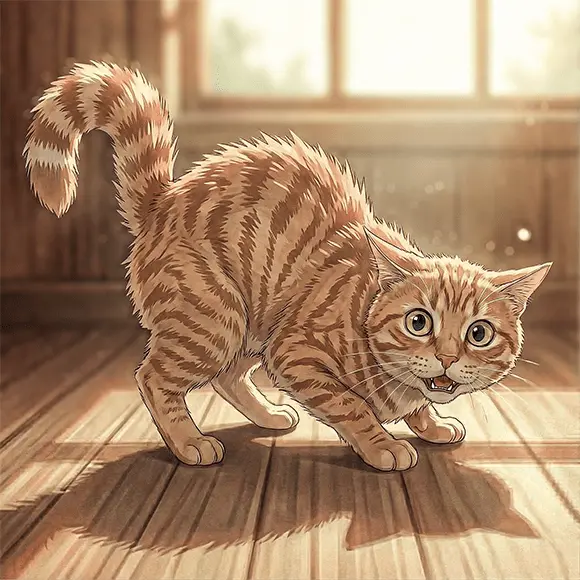
What it means
Defensive fear signal – wants to appear larger to scare off a threat.
What to do
Do not intervene. Let her calm down on her own in a quiet space.
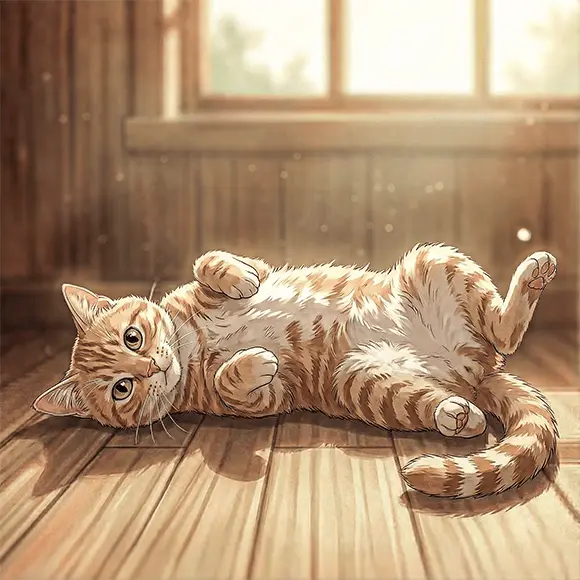
What it means
Total trust, but NOT necessarily an invitation to pet.
What to do
If you are unsure, do not touch the belly. Respect her space and offer her freedom of choice by extending your hand and petting her head first.
The tail – the mood barometer

What it means
Happiness, confidence.
What to do
Respond positively, play with her or speak softly.

What it means
Fear, perceived threat.
What to do
Remove the stressor. Offer a safe space and avoid any interaction.

What it means
Anxiety, stress, fear.
What to do
Speak softly, let her hide, do not insist on petting.

What it means
Irritation, warning.
What to do
Stop any interaction immediately. Give her space and time to calm down.
The whiskers – sensors for proximity and emotions
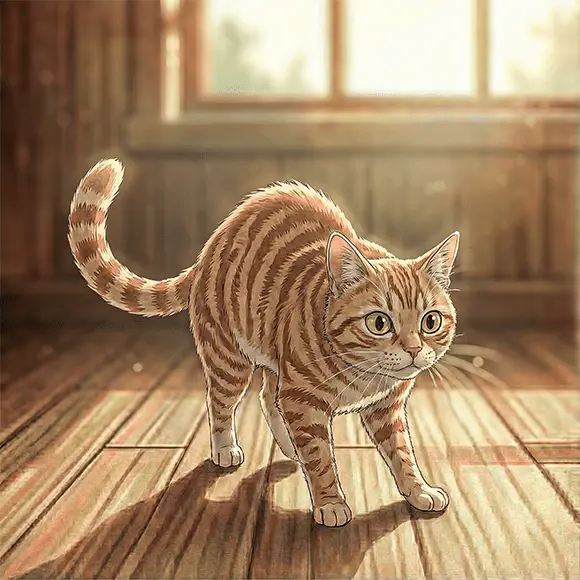
What it means
Curiosity, increased interest or maximum attention on an object / prey.
What to do
Let her investigate. If you want to interact, do so calmly and without suddenly distracting her.

What it means
Calm state, the cat is relaxed and comfortable.
What to do
You can continue the interaction or play without issues.
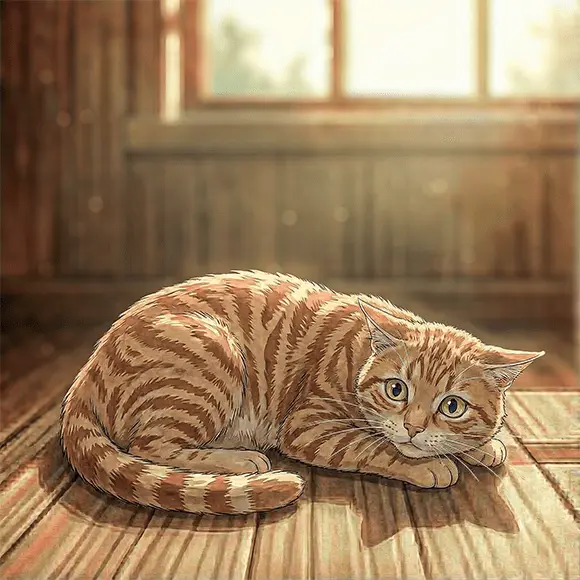
What it means
Fear, stress or preparation for defense.
What to do
Avoid contact, offer space and a safe place to retreat.

What it means
Overstimulation, irritation or frustration.
What to do
Stop the interaction and let her calm down.
Other bodily behaviors with meaning
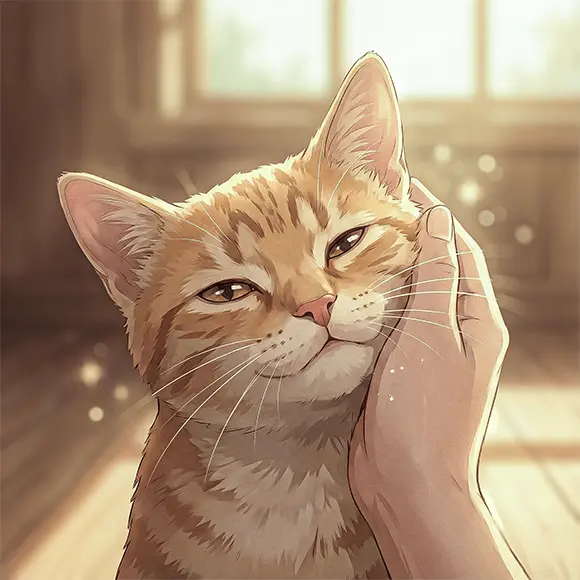
What it means
Marks you with pheromones → affection, belonging.
What to do
You can respond with pets or a soft voice. It’s an invitation to closeness.

What it means
Can indicate pleasure, but also pain or stress.
What to do
Evaluate the context – if she is sick or acting differently, go to the vet.

What it means
Can be a sign of anxiety or discomfort.
What to do
Monitor behavior. If it persists, consult a vet.
Why is it important to understand body language?
Because ignoring these signals can lead to:
- Increased stress in the relationship with the cat.
- Wrong interactions (touching when it’s not appropriate).
- Unwanted behaviors, which are actually misunderstood messages.
How to recognize signs of discomfort or pain in a stray cat
Even though this guide is created mainly for understanding the house cat, the same clues can help you identify a cat in distress on the street. Here are some key signs:

Can indicate intense fear or pain.

Sign of major stress or breathing difficulties.

Possible pain or shock.

Possible blow, accident, infection etc.

May hide a wound or pain.
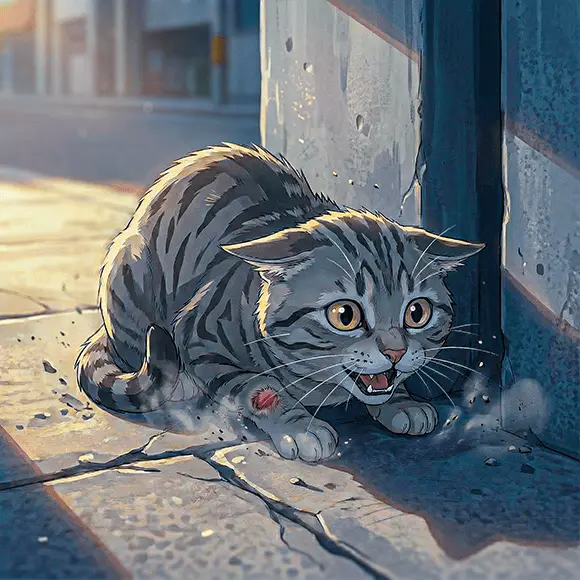
Defensive reaction, often linked to discomfort.
To identify a veterinary emergency, read the article dedicated to this topic and act informed, without losing essential minutes.