Is there more to a cat’s diet than just meat?
We often meet people who want to pamper their cats with something “special”. But did you know that a cat’s digestive system is very different from ours? Cats are obligate carnivores, which means their bodies are designed to obtain essential nutrients primarily from meat. Some foods that seem healthy for humans can, in fact, be very dangerous for cats.
Understanding the cat’s natural diet
Cats are obligate carnivores. This means that approximately 90–95% of their diet must come from animal-based proteins and fats.
Their bodies are adapted to process meat – not grains, sugar, or vegetables. Unlike humans or dogs, cats:
- cannot produce certain essential nutrients on their own,
- need a high protein, moderate fat, and minimal carbohydrate intake,
- have a digestive system adapted for hunting small prey (mice, birds, insects).
Essential nutrients found only in animal products:
- Taurine – vital for the heart, vision, and reproduction.
- Vitamin A – cats cannot convert it from plants; they get it only from meat.
- Arachidonic acid – essential for healthy skin and coat.
- Quality protein – for energy and maintaining muscle mass.
Without these nutrients, cats can quickly develop serious health problems: loss of vision, heart disease, liver damage, or general weakness. That’s why meat (chicken, beef, rabbit, lamb, turkey, fish, etc.) must be the core ingredient in any complete and balanced cat food.
What’s behind the label?
Have you ever noticed canned food or pouches for cats that mention pumpkin, cranberries, psyllium, tuna, chicken broth, carrot, or zucchini?
You may have wondered: Why would a cat eat something like that if it’s a carnivore? Although most of the diet must come from meat, small portions of vegetables, fruit, or fiber can be useful for digestion, hydration, or variety.
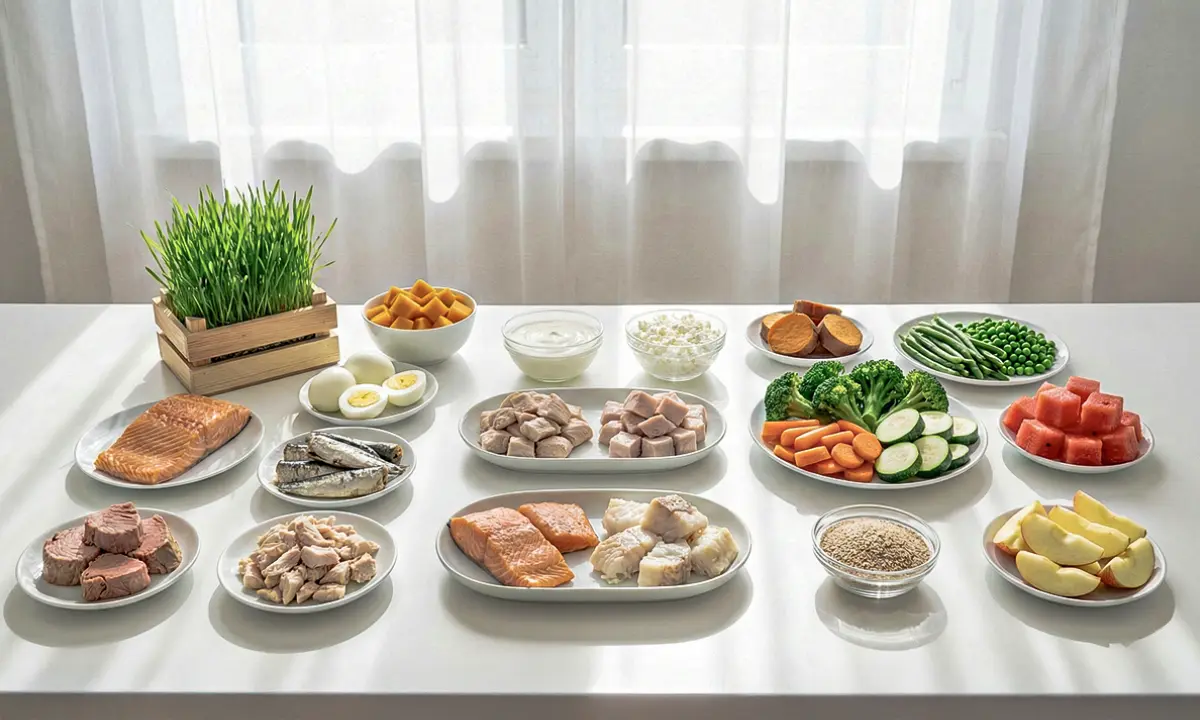
Safe and beneficial foods for cats
Why meat variety matters
On labels you can see different types of meat: chicken, beef, lamb, rabbit, duck, game, fish. It’s not just marketing – it’s nutritional science. Each type of meat offers different combinations of amino acids, fats, and minerals.
Safe types of meat
- Chicken / turkey – lean meat, easy to digest.
- Beef / lamb – rich in iron and zinc.
- Rabbit / duck – ideal for sensitive or allergic cats.
- Fish (salmon, sardines, trout, tuna) – adds Omega-3 fatty acids, good for skin and coat.
How to serve at home
- Always boiled or steamed, without salt, oil, or seasoning.
- Cooked bones can splinter – never offer them.
- Raw meat only on a veterinarian’s recommendation (risk of bacteria).
- It’s recommended to rotate meat types to avoid intolerances.
Recommended amount (as a supplement)
- 1–2 tablespoons of cooked meat, a few times per week, as an addition to a complete food.
- It does not replace main meals.
- Boiled chicken breast, shredded, is an excellent and safe treat.
Organs – the cat’s “natural vitamins” (in moderation)
- Chicken liver – rich in vitamin A and iron, but in small amounts. Too much can cause toxicity.
- Chicken heart and gizzard – excellent sources of taurine, zinc, and B vitamins.
- Kidneys – contain useful minerals, but must be well boiled.
Amount: a teaspoon as a reward, or up to 10% of the diet if the rest is complete food.
Fish (only cooked, never raw)
- Cats love fish – and for good reason: it’s rich in Omega-3 fatty acids, which support the health of the skin, coat, and joints.
- Recommended types: salmon, sardines, tuna (for cats only), trout, cod.
- How to serve: cooked, without oil or seasoning.
To avoid:
- Raw fish (contains thiaminase – destroys vitamin B1).
- Salted or smoked fish or canned fish for humans.
- Too much tuna (possible heavy metal content).
How often?
- Rotate fish species and occasionally offer a “fish-free week”.
- “Fish is wonderful for cats – but only when it’s part of a varied diet.”
- Fish can make up a maximum of 25–30% of the total diet.
- Combine it with other meat types (chicken, beef, lamb).
- Avoid: raw, salted, smoked fish, fish preserved for humans, excessive tuna.
Healthy treats
Instead of human food scraps, try these safe and nutritious options:
- Small pieces of boiled chicken or turkey;
- A teaspoon of plain pumpkin puree;
- Pureed carrot, green beans, or cooked sweet potato;
- A few flakes of cooked salmon;
- Freeze-dried meat treats (100% single ingredient);
- Cat grass or catnip for fun.
Chicken bone broth – a natural way to stay hydrated
One of the healthiest and most natural ways to encourage fluid intake is homemade chicken bone broth. It’s ideal for older, picky cats or cats with kidney sensitivities.
How to prepare:
- Simmer chicken bones slowly for a few hours, until the liquid becomes clear and rich in collagen.
- After it cools, you can:
- Pour it over wet food for aroma and hydration,
- Freeze it in ice cube trays and gently warm as needed,
- Serve at room temperature (never hot).
Benefits:
- Supports hydration,
- Promotes joint health (contains collagen and natural glucosamine),
- Improves digestion and appetite.
Do not add salt, onion, garlic, herbs, or oil — they are toxic to cats. The broth should not replace meals — it’s a supplement, not a complete food.
Eggs (boiled only)
- An excellent source of protein, amino acids, and B vitamins.
- Avoid raw eggs – they may contain Salmonella and enzymes that reduce biotin absorption.
Amount: ½ teaspoon, occasionally.
Pumpkin
- Helps in both constipation and diarrhea thanks to its gentle fiber content.
Amount: ½–1 teaspoon, a few times per week, especially for long-haired cats (prevents hairballs).
Psyllium husks (in small amounts)
- Regulates intestinal transit, but only on a veterinarian’s recommendation.
- Always mix with wet food and water.
Amount: very small amounts, according to the veterinarian’s recommendation.
Cat grass (grown from special seeds)
- Cat grass (usually wheat, oats, or barley) is safe and helps naturally eliminate fur balls.
- Satisfies the instinct to chew greens without the risk of toxic plants.
Amount: mixed with food a few times per week.
Small amounts of lactose-free dairy products
- Some cats enjoy a teaspoon of plain lactose-free yogurt or cheese, which provides calcium and probiotics.
How much: very small amounts, according to the veterinarian’s recommendation.
Sweet potato (cooked, plain)
- Provides fiber, beta-carotene, and a mild sweetness that some cats appreciate.
- Must be fully cooked and mashed — never raw (raw can irritate the stomach).
amount: very small amounts, according to the veterinarian’s recommendation.
Carrots (cooked or steamed)
- Rich in vitamin A and antioxidants.
- Cats can’t efficiently convert plant beta-carotene into vitamin A, but a little cooked carrot adds texture and variety.
Amount: very small amounts, according to the veterinarian’s recommendation.
Green beans, peas, and broccoli
- Low-calorie vegetables with lots of fiber, useful for overweight cats.
- Cooked green beans or peas help digestion and provide vitamins A, C, and K.
- Avoid canned beans (too much salt).
Amount: very small amounts, according to the veterinarian’s recommendation.
Cucumber and zucchini
- Mostly made up of water — good for hydration in warm weather.
- Some cats prefer them as crunchy snacks.
Amount: very small amounts, according to the veterinarian’s recommendation.
Apple (peeled and cored)
- A few small pieces of peeled apple can provide fiber and vitamin C.
- Remove the seeds and core — they contain cyanide compounds and are toxic.
Amount: very small amounts, according to the veterinarian’s recommendation.
Watermelon (seedless)
- Cats don’t need fruit, but a small cube of watermelon can hydrate and cool them down.
- Always remove the seeds and rind.
Amount: very small amounts, according to the veterinarian’s recommendation.
Water, water, water! – Hydration is essential
Cats don’t naturally drink enough, so hydration is crucial.
Always ensure:
- Fresh, clean water daily.
- Wet food for additional fluid intake.
- Water fountains — many cats prefer moving water.
Foods to avoid – toxic or dangerous
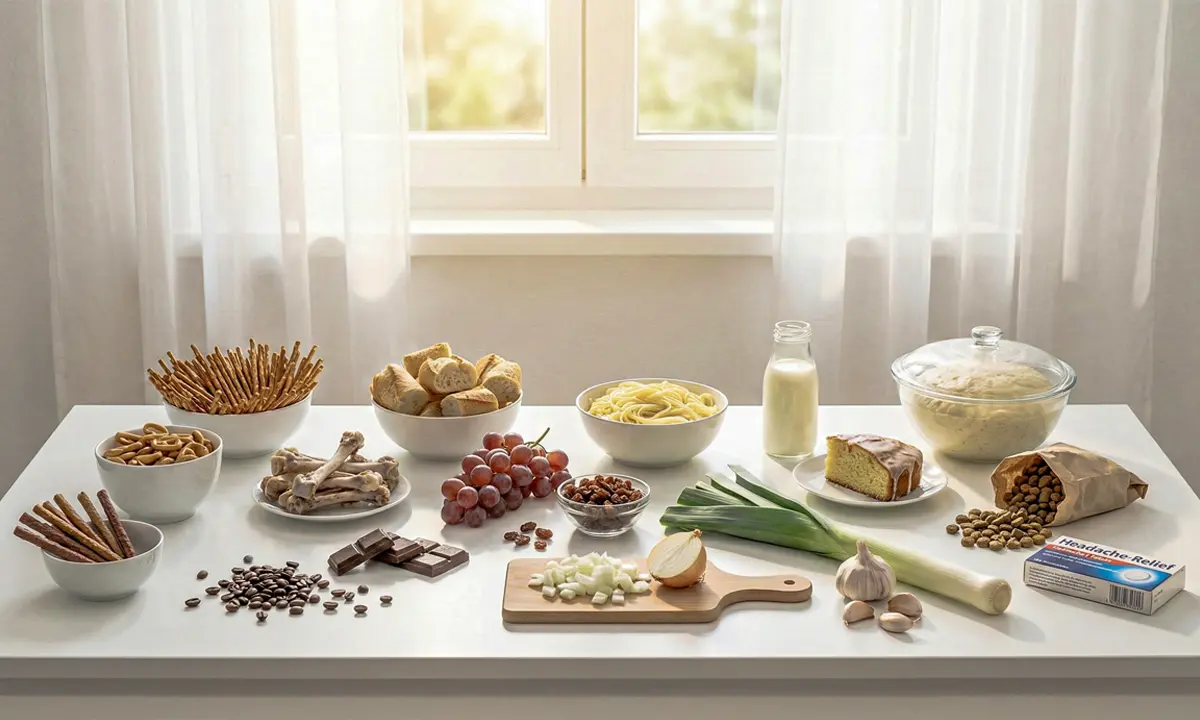
These foods should never be given — even small amounts can be harmful or fatal:
Salty or spicy foods
Cats are sensitive to salt — excess can cause dehydration, vomiting, or kidney stress.
Bread, pasta, and carbohydrates
Cats don’t get nutrients from carbohydrates and may develop obesity or diabetes.
Cooked bones
Never give cooked bones — they can splinter and cause choking or internal injuries.
Chocolate, coffee, and tea
Contain theobromine and caffeine — can cause arrhythmias, tremors, or seizures.
Grapes and raisins
Even small amounts can cause acute kidney failure.
Onions, garlic, chives, leeks
They destroy red blood cells and cause hemolytic anemia. Cooked or raw — both are dangerous.
Sweets and artificial sweeteners
Sugar causes obesity and dental problems.
Xylitol (sugar-free gum, candies) causes liver failure and hypoglycemia.
Milk (regular cow’s milk)
Most adult cats are lactose intolerant — milk causes diarrhea, bloating, and gastric discomfort.
Indoor plants and flowers
Common plants such as lilies, tulips, aloe vera, ivy, philodendron, poinsettia, and daffodils can be extremely toxic.
Grow only grass or herbs that are safe for cats.
Medicines for humans
Paracetamol (acetaminophen) and ibuprofen are deadly for cats — they can cause liver failure and internal bleeding.
Never give human medications without a veterinarian’s instruction.
Alcohol and raw dough
Even small amounts of alcohol or fermented yeast dough cause ethanol poisoning. Symptoms: vomiting, tremors, coma.
Dog food
Not toxic in the short term, but it doesn’t contain enough taurine, arachidonic acid, and protein for cats.
Regularly feeding dog food leads to malnutrition and heart disease.
When in doubt – ask your veterinarian
If your cat has eaten something unusual or shows symptoms like vomiting, drooling, weakness, or refusing food – call your veterinarian immediately.
Cats are small and metabolize toxins much faster than humans, and quick intervention can save lives.
“Complete” vs. “Complementary” – understand the difference
On cat food labels you may see two terms: complete food and complementary (supplementary) food. They seem similar, but the difference is very important. In short:
Complete
Main meal. Provides all nutrients needed daily – proteins, fats, vitamins, minerals, taurine. Can be offered as the only food source.
Complementary
Treat / topper. A treat or supplement with high meat content, but without all required nutrients. Combine with complete food or offer occasionally.
Although complementary food may contain nice pieces of meat or fish, it does not have essential vitamins and minerals. It can be added on top of complete food, but it can never replace it.
For those who prefer simplicity – trust the label
If all these details seem complicated, you’re right: feline nutrition is complex!
The safest choice is to offer complete and balanced food from trusted manufacturers, who formulate recipes under veterinary supervision. This way, your cat gets all the benefits – without risks.
Conclusion
So yes — it’s possible to see pumpkin, blueberries, cranberries, chicken broth, or fish mentioned on cat food labels or recommended by veterinarians online — and now you know why. Feeding your cat correctly is one of the best forms of affection.
Remember: “If it isn’t made for cats — always check before offering.” Each of these ingredients can be beneficial, but only in the right proportions.
With balance, care, and awareness, any cat can have a long, healthy, and happy life. A healthy cat needs a complete, meat-based diet, occasionally enriched with safe vegetables, fruit, or fish. The benefits appear only when they are scientifically balanced with the right nutrients and proportions. If you want to add them yourself, do it with caution, rarely, and in small portions.